


Àború àboyè, to all seekers, guardians, and children of the Orishás
Not long ago, I received a heartfelt message from a reader that struck deep. It wasn’t just a question—it was a cry from the soul, a voice speaking from the wound of history. The reader asked:
“Why are OUR spiritual traditions—stolen from us and locked in museums—now taught by Europeans? Why are white people even allowed to be initiated into Ifá? Who is initiating these people? This is OUR birthright. Haven’t y’all stolen enough?”
First, let me say this: I honor the pain beneath these words. The grief of ancestors enslaved, the violence of colonization, the theft of culture and dignity—these are not abstract ideas. They are living memories, stitched into the body of the Diaspora, carried across oceans, hidden in songs, dances, and prayers that survived against all odds.
And yet, as Ifá teaches us,
“Àròyé kì í tán kó má ṣàgbé”—
"A discussion never ends without the need for deeper understanding.”
(Odu Òsé Òtúrá)
The Illusion of Purity: Who Are "We" Really?
Let us look at ourselves honestly. If we were to examine our DNA, many of us would be surprised. Few of us are purely from one continent, one place, one people. In these bodies, in this blood, flow histories and migrations that span the globe.
I myself am Brazilian, born of a land shaped by Africa, Europe, and Indigenous America. My European roots trace back to 1880. But does that tell you who I am? Or only where some of my ancestors once stood?
Identity is more than the shape of our faces, the color of our skin, or the names of the lands where we were born. These contribute, yes—but they are not the DNA of the soul.
Spirit Travels: The Mystery of Reincarnation
Ifá speaks of òrí inú—the inner head, the seat of our true self. And the journey of the soul does not begin at birth, nor end at death. Across lifetimes, across cultures, we may have walked many roads.
What if your past life spoke Yoruba? What if mine sang in Kongo? Would we deny those echoes of our own being?
As Òrúnmìlà teaches in Odu Ìdí Méjì:
“Ayé jẹ́ àlejò”—
"The world is a marketplace; we are all visitors."
No one stays forever. We come, we learn, we grow—and then we move on.
Grief, Violence, and the Danger of New Borders
The history of pain is real. The longing to protect what was stolen is valid. But let us be careful not to let this grief turn into new walls, new violence, new exclusions.
True identity does not come from pushing others out, but from knowing deeply where we ourselves stand. It is not about defining myself by who you are not. It is about knowing who I am, where I come from, and where I am going.
Perhaps the only thing we truly own is our character—our ìwà—and the freedom to decide what to think, what to believe, and how to act.
As Ifá reminds us in Odu Òfún Méjì:
“Ẹni tó bá fẹ́ mọ̀ Ifá, kó mọ ìwà”—
"Whoever wishes to know Ifá must first know good character."
The River Is Wide Enough
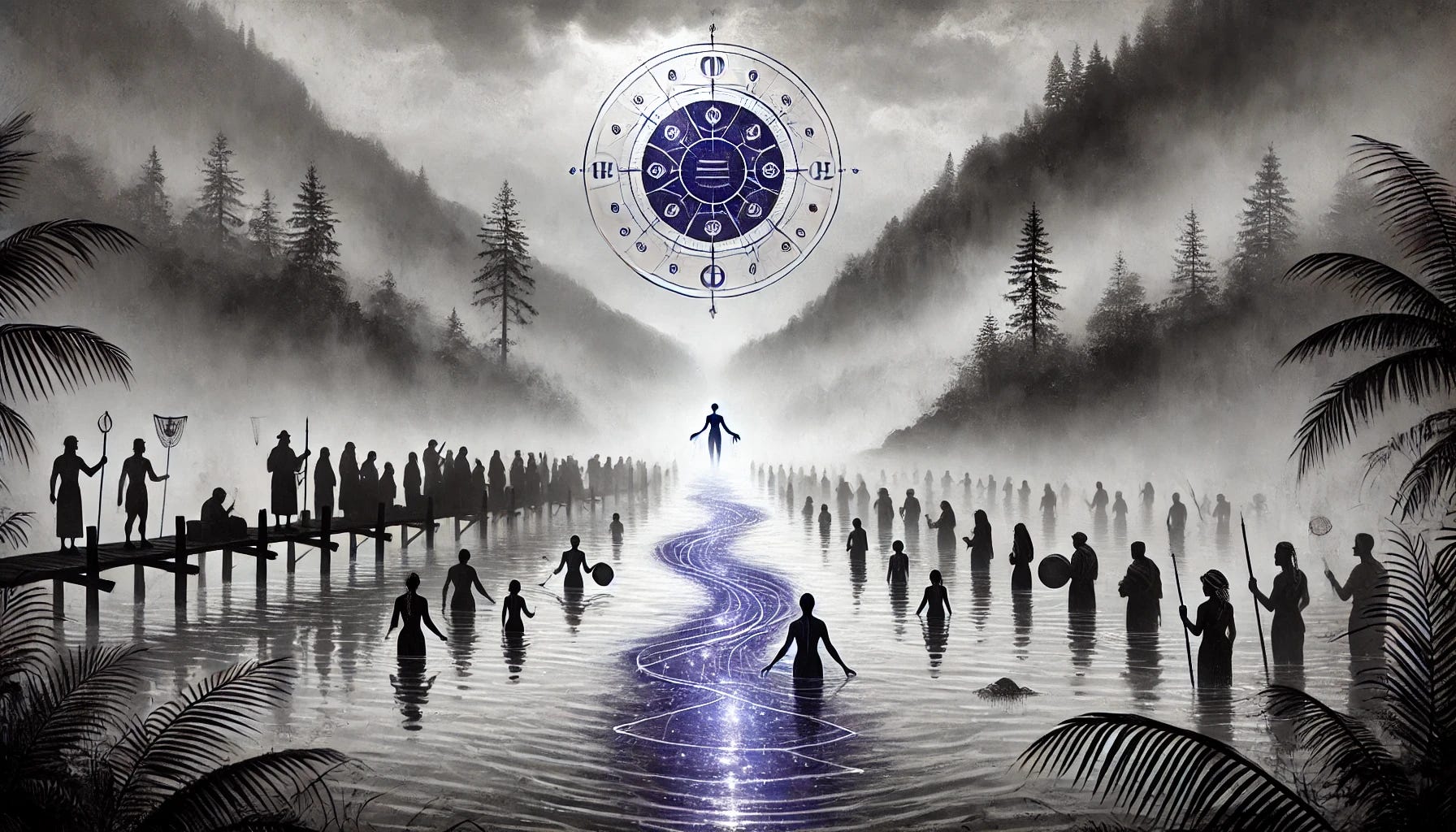
The Orishás are not property. They are not things to be hoarded. They are living energies—the river, the wind, the earth, the iron, the sun. And the river does not ask for your passport.
But that river does have laws. Not everyone who desires to drink from it may do so freely. Access is granted by calling, not by claiming.
Let us be guardians, not gatekeepers. Let us ask not only where are you from?—but also how have you come?
The Orishás see the heart before they see the body.
May we hold this conversation with the gravity it deserves. May we honor the past without letting it poison the future. May we protect the sacred without becoming harsh. And may we always remember: Ìwà pẹ̀lẹ̀—gentle, balanced character—is the true measure of belonging.
Stay blessed,
May your path be guided by Orí, illuminated by Ifá, and held in the embrace of the ancestors.
Modúpẹ́ o. Aṣẹ.
Babá Tilo de Àjàgùnnà
DAILY IFÁ
Next on DAILY IFA, May 28th: To whom do we belong?
Next on DAILY IFA, June 31st: Why Harmony Matters More Than Balance
Thank you for these words. I will ponder them. As someone who has been alternately accepted and reviled for following the calling from the path of Ifa, it helps to have our elders speak of this challenge in a heartfelt manner that adds to the dialogue. To me, I rest in knowing that although Ifa is clearly founded on ancestral lineage and community-continuity- another aspect of it is that Ifa is not bound by time or geography, Olodumare does not see countries and the Orisas do not need faith to exist. Unlike some beliefs, we don’t have to believe in them for them to be real— it is our honor to see them and to nurture humanity with their wisdom. Ase.