


Dear readers,
“My Òrìṣà is Ògún.”
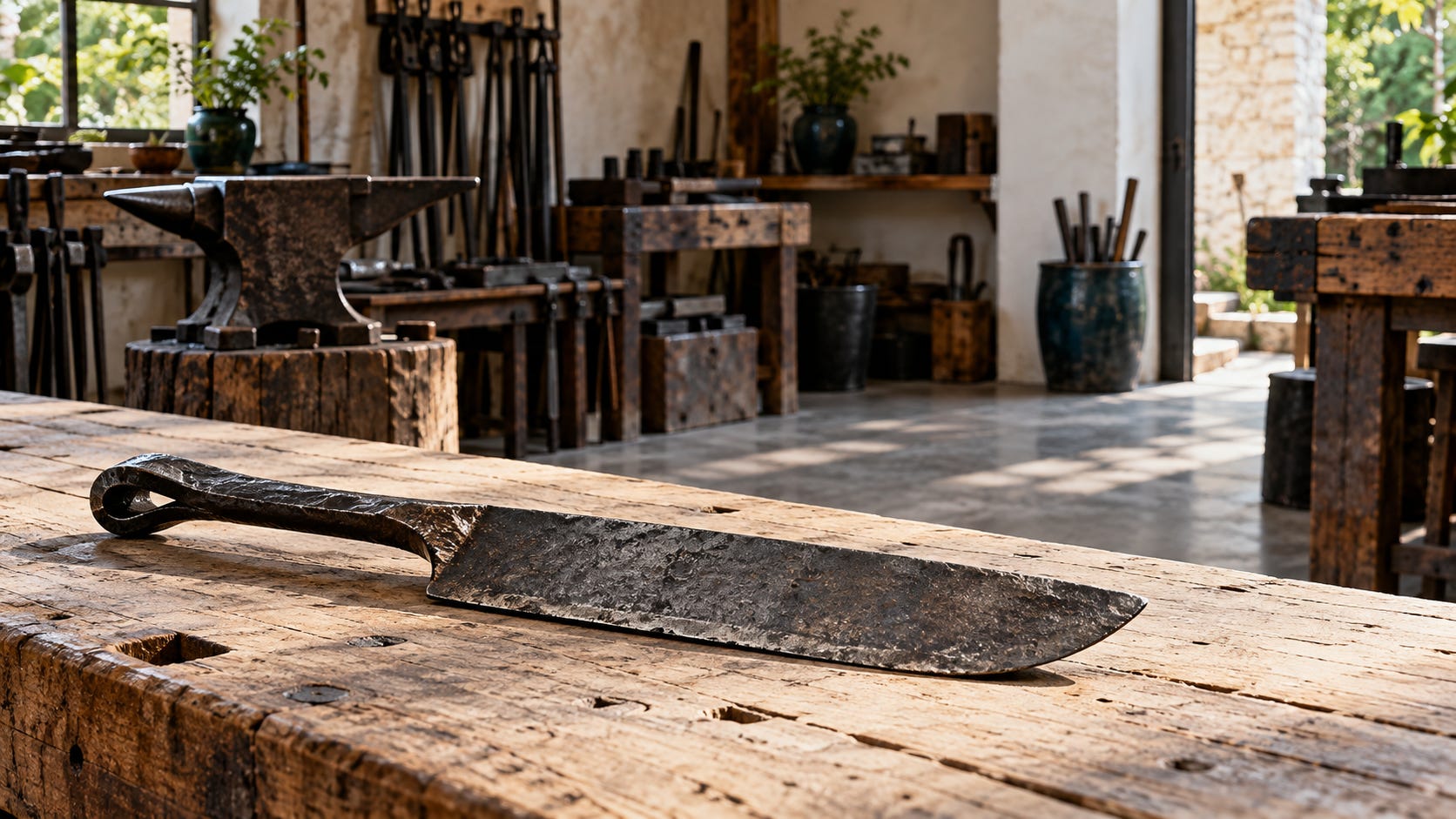
Many of us have heard that sentence. Perhaps some of us have said it. Now imagine that its speaker, a practitioner of the Yorùbá Ifá–Òrìṣà tradition, is seated beside two other people. One comes from a Vodun family in the Republic of Benin. The other practices Cuban Palo, a tradition shaped by Kongo inheritances. A blacksmith sets an iron blade on the table between them.
“Ògún has a particular place in my life,” says the Ifá practitioner.
“We honor Gu at the forge,” says the visitor from Benin.
“In my house, we work with Sarabanda,” says the practitioner from Cuba.
For an instant, the answer seems obvious: three names for the sacred power of iron.
Then they begin to explain how they know that power. The conversation becomes much more interesting.
What does the iron open?
For the Yorùbá practitioner, Ògún is present in iron, in the work that clears a road, and in the danger of a blade that can build or wound. But “my Òrìṣà” cannot mean that this person owns Ògún. Whole families, trades, and towns have honored him. The intimate question is how this life has come into relationship with him: through divination, inherited practice, initiation where appropriate, offerings, and the obligations that follow.
The visitor from Benin knows Gu as a power of iron, forging, and the opening of a path. This is no distant abstraction. A forge in Porto-Novo can be dedicated to Gu; a practitioner may keep a small private shrine of iron, while a larger shrine serves a public place. Ògún and Gu belong to neighboring, historically connected worlds. Their likeness is real, but their names do not make every rite, story, or relationship interchangeable.
“Wait,” says the third visitor. Sarabanda belongs to Cuban Palo’s Kongo-rooted history; we should not put that name in the mouth of a priest from the historical Kongo and pretend nothing happened on the Atlantic crossing. In one Palo house, a particular Sarabanda is encountered through a particular nganga (nkisi): a consecrated vessel, its prepared substances, its relationship with the dead, and the people charged with tending it. Another house’s Sarabanda is not simply an identical copy. Even the word nganga has made a journey: in historical Kongo it names a ritual specialist; in Cuban Palo it can also name the prepared vessel.
The blade is still lying on the table. Already it has taught us something: recognizing a shared element tells us very little about where a spiritual relationship lives.
Whose power is personal?
Here is the surprise. It would be easy for an Ifá reader to say, “Our relationship is personal; theirs is collective.” But the evidence will not let us say that. Gu can have a private shrine. Imagine a historical Kongo nkisi bearing an iron nail placed for one person’s appeal: the same powerful figure might be consulted again by another person or called upon for the peace of a community. In Palo, the relationship between a practitioner, a particular nganga, and a particular dead person can be profoundly specific. And Ògún, whom an individual serves, can also belong to the life of a forge or a town.
So “personal” and “collective” are not two separate religions. They are questions we must ask inside each tradition. Whose life is being addressed? Who tends the shrine? Who is entitled to ask for help? Who else bears the obligation? The answers may differ even between houses within one tradition.
In Ifá, one further question gives this conversation its center: What does my Orí require?
Orí is the inner head: the person’s own spiritual center and the path that must be lived. It is not another name for Ògún, nor is the Òrìṣà of one’s head a substitute for Orí. A historical Yorùbá ilé-orí, a shrine for a person’s inner head, makes the intimacy of that relationship visible. Consultation with Ifá can bring a person’s circumstances, duties, and relationships with Òrìṣà into focus. The answer is not exhausted by saying the name of a single power.
This matters especially when the conversation crosses into Brazil. In many Ketu Candomblé houses, an initiated person’s orixá de cabeça (means: head Òrìṣà) and other significant Òrìṣà relationships are carefully distinguished; a personal assentamento (shrine) is cared for within a shared terreiro (spiritual house). Some houses articulate a second or further Òrìṣà relationship in particular ways. Those arrangements are meaningful, but they should not be projected as one fixed list of three Òrìṣà assigned to every human being in every Yorùbá community.
And the historical surprise runs in the other direction, too. Records from eighteenth-century Angola describe named minkisi coming to the heads of named people. A sacred power’s relation to a particular head was not invented when Kongo-Angolan practices met Ketu practice in Brazil. Candomblé Angola has its own inheritances as well as centuries of exchange with its neighbors.
Who stands behind the person?
Now ask our three guests about the dead. The conversation changes again.
Yorùbá people honor ancestors, and their presence cannot be erased from a discussion of one person’s path. Yet honoring one’s ancestors, tending Orí, and serving Ògún are not three interchangeable acts. In Fon communities, an asen can commemorate one particular dead person while standing inside the family’s shrine house. The ancestor is individual; the duty to remember is shared. In historical Kongo practice, the realm of the dead can empower a nkisi. In Cuban Palo, the dead may be woven into the life of a specific nganga and its ritual family.
None of these observations makes one tradition “warm” and another “cold.” Gu and Ògún can both protect and demand integrity. In Fon accounts of Fá, coolness can name a hoped-for balance and well-being, not emotional indifference. The useful question is more precise: How do the living, the sacred powers, and the dead become answerable to one another here?
Our visitors have not given us three versions of an iron god. They have shown us three ways to form and sustain a relationship—and, within each, a living weave of person, house, and community.
The question I bring back to Ifá
When someone tells me, “My Òrìṣà is Ògún,” I hear an important beginning. I also want to ask: How was this relationship recognized? What has Ifá revealed about the person who must live it? Which duties belong to that person, and which belong to the house and community? What counsel comes from Orí, and what conduct will honor it?
This is the depth of individualization that matters to me in Ifá. It does not make us solitary owners of divine forces. It asks us to take responsibility for a life whose Orí is our own, while learning from divination, Òrìṣà, ancestors, and the people with whom we worship. Spiritual agency grows through those relationships; it is not freedom from them.
The blacksmith’s blade can clear a road. It can also cut what we were meant to protect. Knowing the sacred name of iron does not choose between those acts for us.
Before we ask which power walks beside us, we might ask what our own Orí is asking us to do with the path ahead.
With blessings,
Babá Tilo de Àjàgùnnà
DAILY IFÁ