


Dear seekers of wisdom,
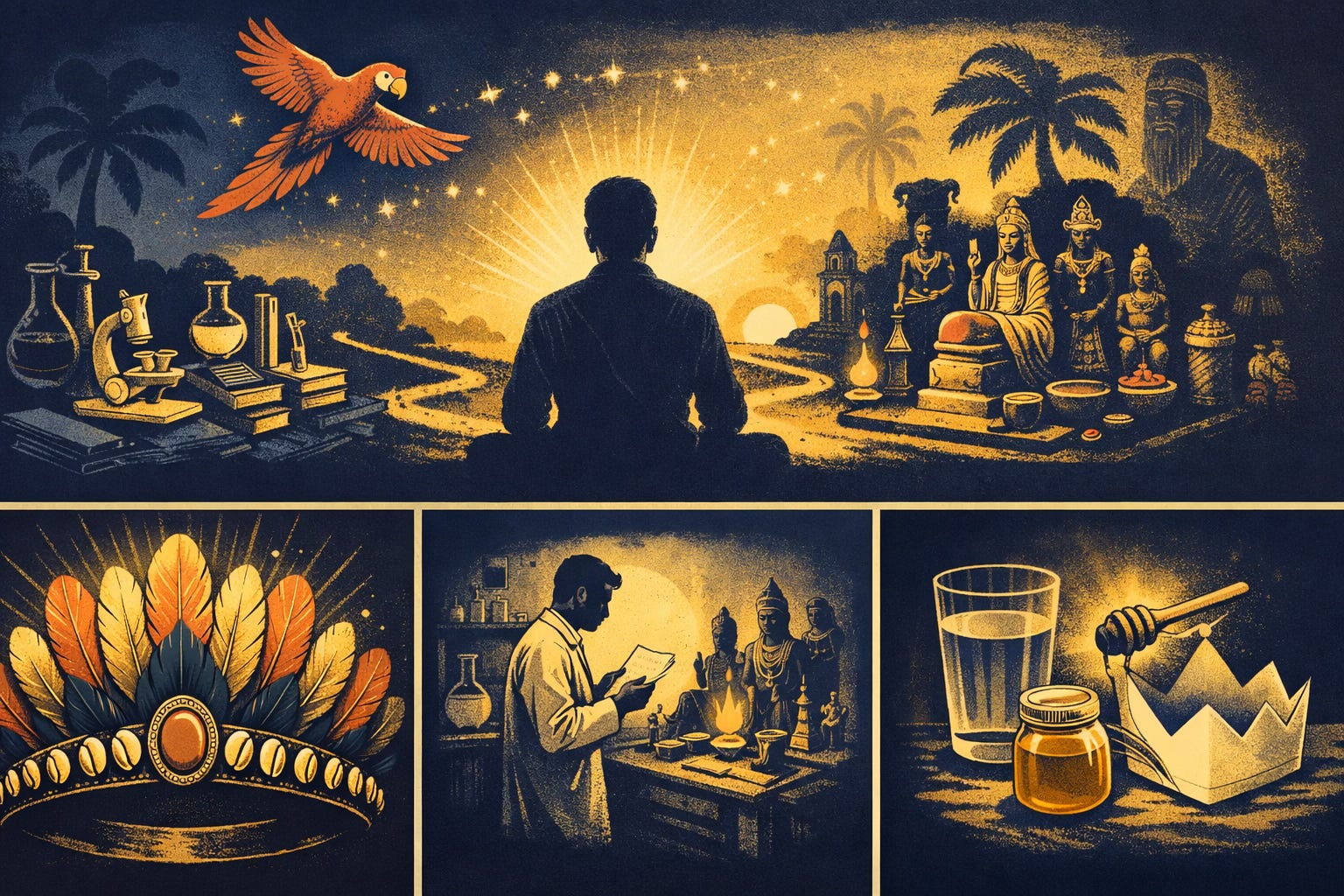
“The parrot’s feathers come from the tail, but they are worn on the head.”
That single proverb is already a full lecture on communication—because it reminds us that what looks small, ordinary, or even laughable can become the crown everyone recognizes.
I have lived in a world where precision is the highest currency. As a natural scientist—and also trained in the logic of business and organizations—I learned early that some minds fall in love with questions the way others fall in love with people: deeply, obsessively, faithfully. In research culture, you can spend years on a tiny uncertainty, a subtle contradiction, an almost-invisible phenomenon. Whether it will ever “help humanity” is, at first, irrelevant. That is the romance of foundational research: you pursue truth even when the world has not yet discovered a use for it.
In that ecosystem, accuracy matters more than warmth. The social layer is often treated like background noise. And the language reflects it: dense, coded, beautifully abstract—sometimes so abstract that only insiders can taste the meaning.
Later, I recognized the same pattern in other “bubbles.” Journalists are trained to sharpen critique. Investment bankers live inside symbolic finance language. Writers sometimes speak in abstraction as a badge of artistry. Each group has its dialect. Each group rewards fluency in its own codes.
And I’ll admit: I was fascinated by the challenge. I enjoyed compressing thought. I enjoyed turning messy reality into elegant models, tight arguments, distilled concepts. There is a pleasure in that kind of mastery.
But then life—and spirit—began to teach me something that science rarely measures.
I learned, slowly and sometimes painfully, that recognition inside a bubble does not automatically produce impact in the human world. You can be admired and still not move anyone. You can be “right” and still not change a single life. You can write something flawless—and still leave the room emotionally untouched.
At some point, the lesson becomes unavoidable: what matters is not how intelligently we can phrase something, but what our words actually do to people.
And yes—this is where many gifted people must swallow an uncomfortable truth: sometimes a “cheesy” love song changes more lives than a highly polished book read by a few. Not because the song is intellectually superior, but because it lands. It enters the body. It opens memory. It makes people brave enough to change.
This is not an argument against abstraction. Abstraction is power. But Ifá asks a sharper question:
What is your power doing?
Narrative Teaching
Why Ògbè Òṣé fits this theme
For this newsletter’s spiritual backbone, I chose Ogbe Ose (Yorùbá: Ògbè Òṣé). This Odù is explicitly framed as a sign where laughter, mockery, prophecy, secrets, and the paradox of being underestimated all converge.
A quick clarification for accuracy (because accuracy matters—especially to scientists):
Ogbe is the base Odù (“the left leg”). Ògbè Òṣé is the mixed Odù. Ògbè Òṣé is not the same as Ògbè Òṣé—reversal changes meaning and spiritual geometry.
Ògbè Òṣé carries a core metaphor that is almost a complete philosophy of communication:
“The mockery of the parrot is the wisdom of the oracle.”
In other words: what people laugh at today may be exactly what saves them tomorrow. And what looks like “simple repetition” may actually be sacred transmission.
The myth that guides us: The Limping Slave and the Crown of Feathers
Ògbè Òṣé tells a story that feels like it was written for anyone who has ever been underestimated—or misunderstood because their gift didn’t match the room’s preferred “code.”
A proud priest owned a slave who limped so heavily that his walk announced him before his voice could. The master was embarrassed by him, treating him like a symbol of shame rather than a human being. But the limp hid a secret: the slave could hear the ancestors. In silence, under trees, Egún whispered spiritual verses to him.
Then a crisis arrived: the king required a new crown for a festival, and the master had none. Desperate, he turned to the very one he had mocked. The limping slave climbed to high ground, gathered red and yellow feathers, and called to the parrot spirits. He returned with a crown unlike anything the palace had seen—something that carried memory, beauty, and mystery at once.
The king wept when he saw it. The slave was freed. The limp remained, but now it was paired with dignity. The story’s lesson is clear and brutal in its simplicity:
Those who limp in body may carry the crown in spirit.
The proverb, interpreted through your life
Many highly trained minds are “limping” in one specific way—not in intelligence, but in translation. We can think deeply, but we may forget how to speak so others can follow. We can build models, but we may forget how to build bridges.
And Ògbè Òṣé answers with a parrot feather crown.
Because a parrot does something that looks unimpressive: it repeats. But Ògbè Òṣé insists that repetition is not stupidity—it is transmission. It is how sacred language travels from one mind to another. It is how wisdom becomes usable.
This is why Ògbè Òṣé is not merely about being mocked—it is about becoming fluent in impact. It teaches you how to take what is “tail-feathers”—private knowledge, hidden insight, complex truth—and make it something people can actually wear on the head as a crown.
Subscriber Transition
If this theme is yours—if you’ve ever felt that your best thinking doesn’t always translate into real-world movement—then the deeper layers of Ògbè Òṣé will serve you.
In the continuation of this newsletter for supporting subscribers, you’ll receive:
how Ògbè Òṣé distinguishes clarity that heals from speech that inflates ego (“the egg must not break in public”)
a practical framework for communicating across “bubbles” without losing precision or soul
guidance for spiritual development, health, love & family, wealth & business, and ancestral alignment under Ògbè Òṣé
when to consult this Odù in moments of conflict, leadership, visibility, or misunderstanding
Key Òrìṣà of this Odù
Closing Insight
What I love most about Ògbè Òṣé is that it does not mock intellect—it redeems it.
It tells the scientist, the analyst, the writer, the strategist: your depth is not the problem. The problem is when depth becomes a private language that never becomes medicine.
The parrot’s crown is a symbol of transformation: what was once tail-feathers—hidden, overlooked, dismissed—becomes the mark of authority on the head.
So today, I hold myself to a higher standard than brilliance: impact. Not impact as popularity, but impact as movement—the moment a person feels something true and becomes willing to change.
May your words remain precise. And may they also become wearable.
Babá Tilo de Àjàgùnnà
DAILY IFÁ ACADEMY
What to Ask Next?
Here are questions you can ask the supporting GPTs “Voice of Orisha” and “Wisdom of Ifá” (for supporting subscribers), aligned with Ògbè Òṣé and your communication path:
“Where am I using complexity as protection—and what would courageous clarity look like right now?”
“Which relationship needs fewer explanations and more truth spoken simply?”
“What does my Orí need so my voice creates impact without draining my body?”
“How do I protect my work from envy and misunderstanding while still being visible and useful?”
Spiritual Insights & Teachings
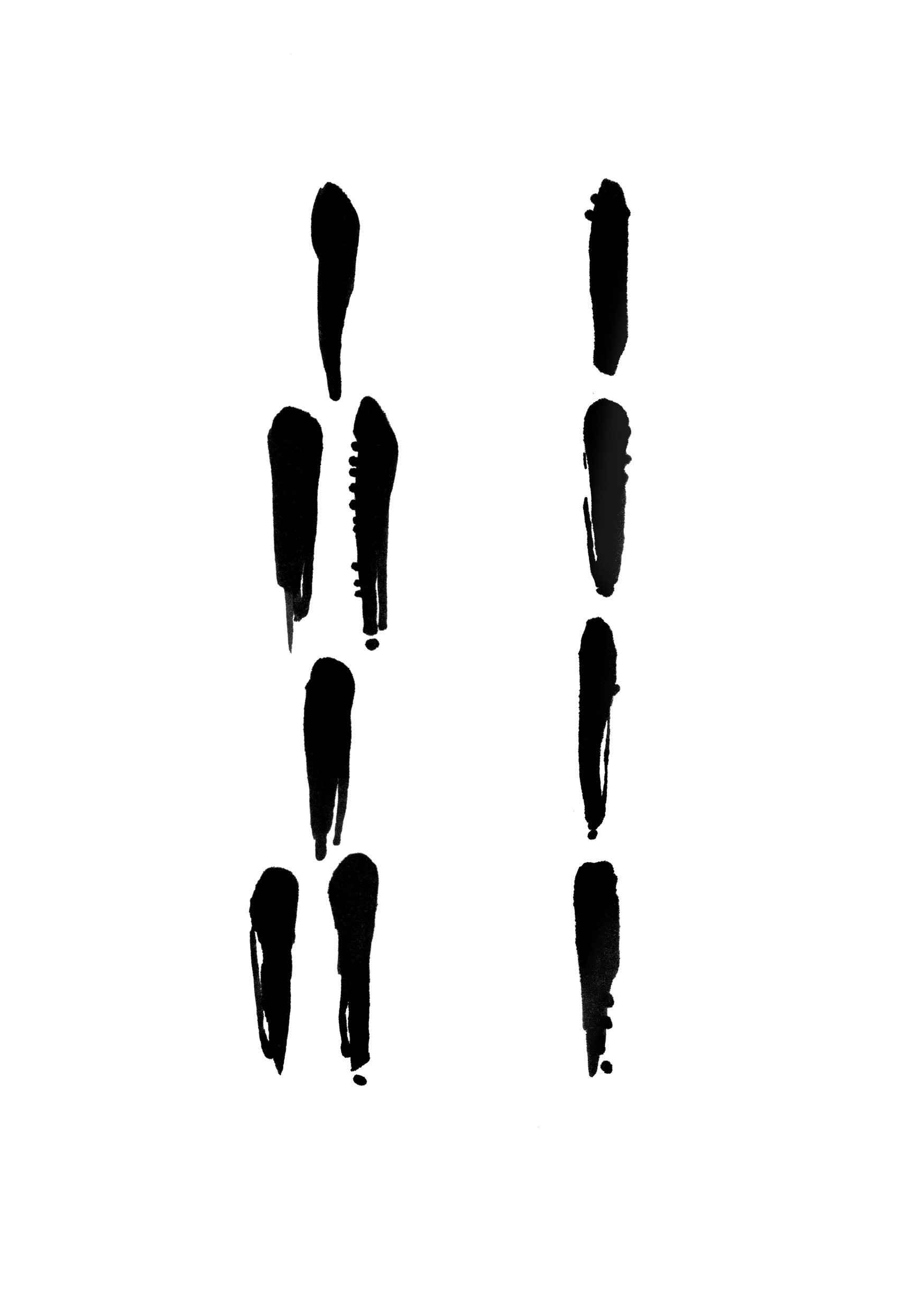
The guiding message of Ògbè Òṣé
Ògbè Òṣé does not flatter the ego. It trains the messenger.
It says: protect what is still growing, speak with intention, and don’t confuse being admired by insiders with being useful to the world. It warns that boasting, overexposure, and careless speech can crack your destiny like an egg dropped in public.
And it gives one of my favorite paradoxes in the text: