


“One who eats with both hands may drop the bowl.”
— from Odu Otura Meji
Dear Omo Orisha (Children of the Orisha),
In the ever-turbulent waters of life, many of us may envy the crab—sidestepping problems, darting between openings, and always reaching for more. But in the sacred Odu Otura Meji, we’re reminded that reaching for more than we are prepared to carry has its price.
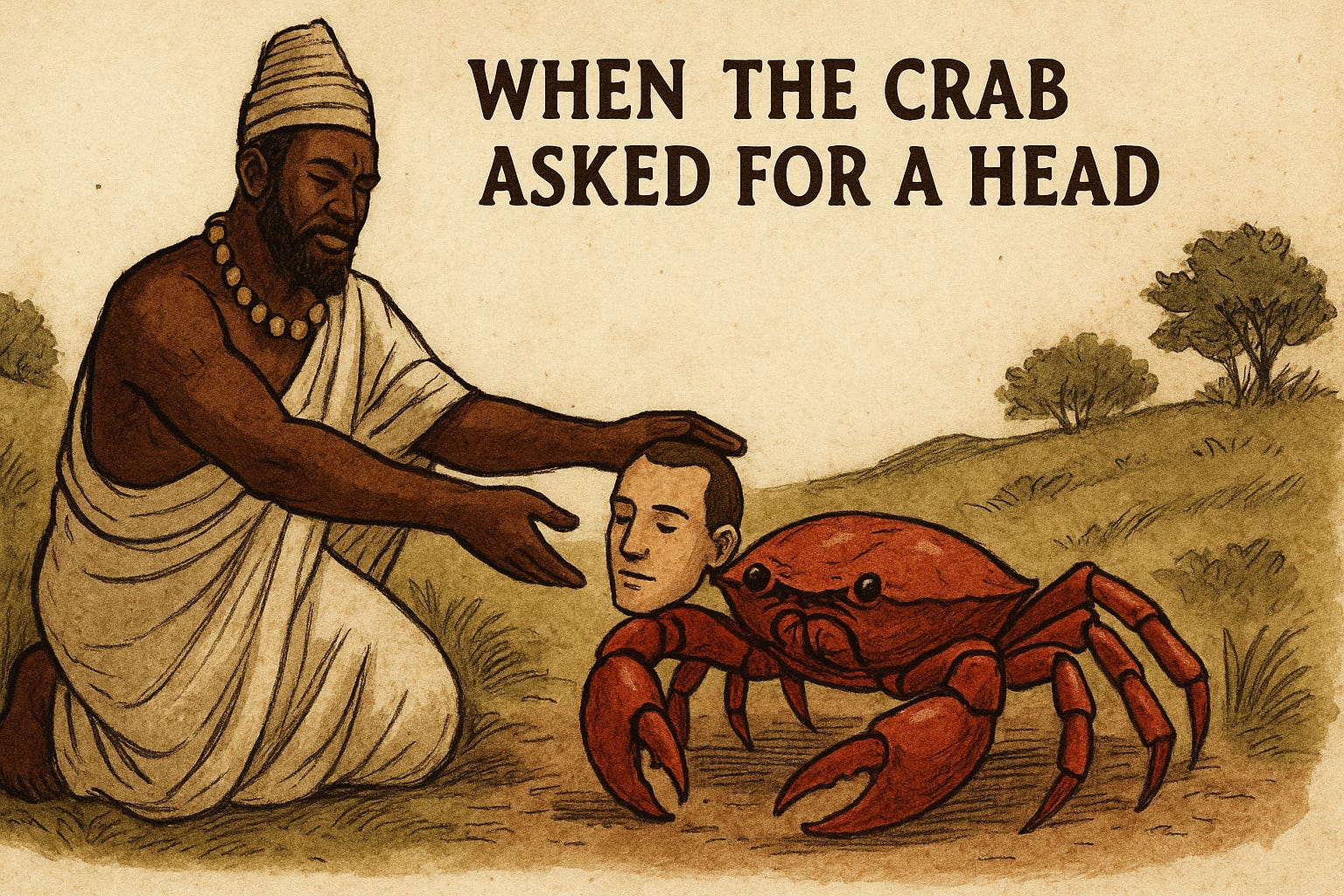
🦀 THE MYTH: When the Crab Asked for a Head
In this path of Otura Meji, the crab approached Olofin, the supreme force, with a bold request: “Give me a head so I can think and rule like the others.”
Up until then, the crab had no defined head—his body and mind were as one, instinctual, impulsive, without contemplation. But ambition drove him. He saw the advantages others had with heads: wisdom, planning, foresight.
Olofin, amused yet willing to test the crab’s sincerity, granted his wish.
But the crab, once crowned with his new head, became overconfident. He strutted. He schemed. He began exploiting others, using his newfound intelligence not for upliftment but for manipulation.
Eventually, his own schemes caught up with him. The crab’s head became too heavy to carry. It burdened him. His thoughts became twisted. He no longer knew who he was—body or mind, heart or head. He became confused, and in some versions of the story, he lost the very head he begged for.
INTERPRETATION: Opportunism vs. Initiative
Otura Meji reminds us: not all opportunities are meant to be seized, especially when they pull us away from our Ori (inner destiny).
There is a difference between initiative—acting in alignment with divine timing—and opportunism, which seeks gain without sacrifice, growth, or humility. The opportunist may seem clever for a moment, but Ifá teaches us that destiny is not fooled for long.
“A head too big for the neck will cause the whole body to fall.”
— Odu Otura Meji
REFLECTION: Where Do You Overreach?
We live in a world where seizing the moment is glorified. But Ifá invites us to pause and ask:
Am I aligned with my purpose—or just chasing gain?
What am I sacrificing to “get ahead,” and is it worth it?
Is this opportunity mine, or am I reaching into someone else’s destiny?
The story of the crab is not a condemnation—it’s a mirror. It shows us the danger of overestimating our readiness and using blessings to dominate rather than uplift.
Yoruba Expression of the Day:
“Ori l’akoko”
The head comes first.
This reminds us that true success begins with self-alignment, not external conquest.
Questions You Can Ask the Orisha/Ifa-GPTs:
For our supporting members using Voice of Orisha and Wisdom of Ifá, try asking:
“How do I know when I’m acting in alignment with my destiny?”
“What happens spiritually when I take opportunities that weren’t meant for me?”
“What does Otura Meji say about overthinking or mental confusion?”
Stay blessed, and may your Ori always guide you to true opportunity, not illusion.
In balance, in clarity, in truth. Àṣẹ.
Babá Tilo de Àjàgùnnà
DAILY IFÁ
Oct 19, 2025 in DAILY IFA ACADEMY: Òtúrá teaches through the crab’s sideways genius—how patience, timing, and quiet strategy open roads when force won’t. We’ll share a bright river-edge myth and, for paid readers, a simple side-step ritual and cool-head bath to cross the tide with confidence.
Oct 25th, 2025: In the next edition of DAILY IFÁ, discover how the sacred act of truly seeing others—through the eyes of Òṣun and the wisdom of Ifá—can deepen your relationships, awaken your spirit, and align your Orí with divine purpose.
ASE