


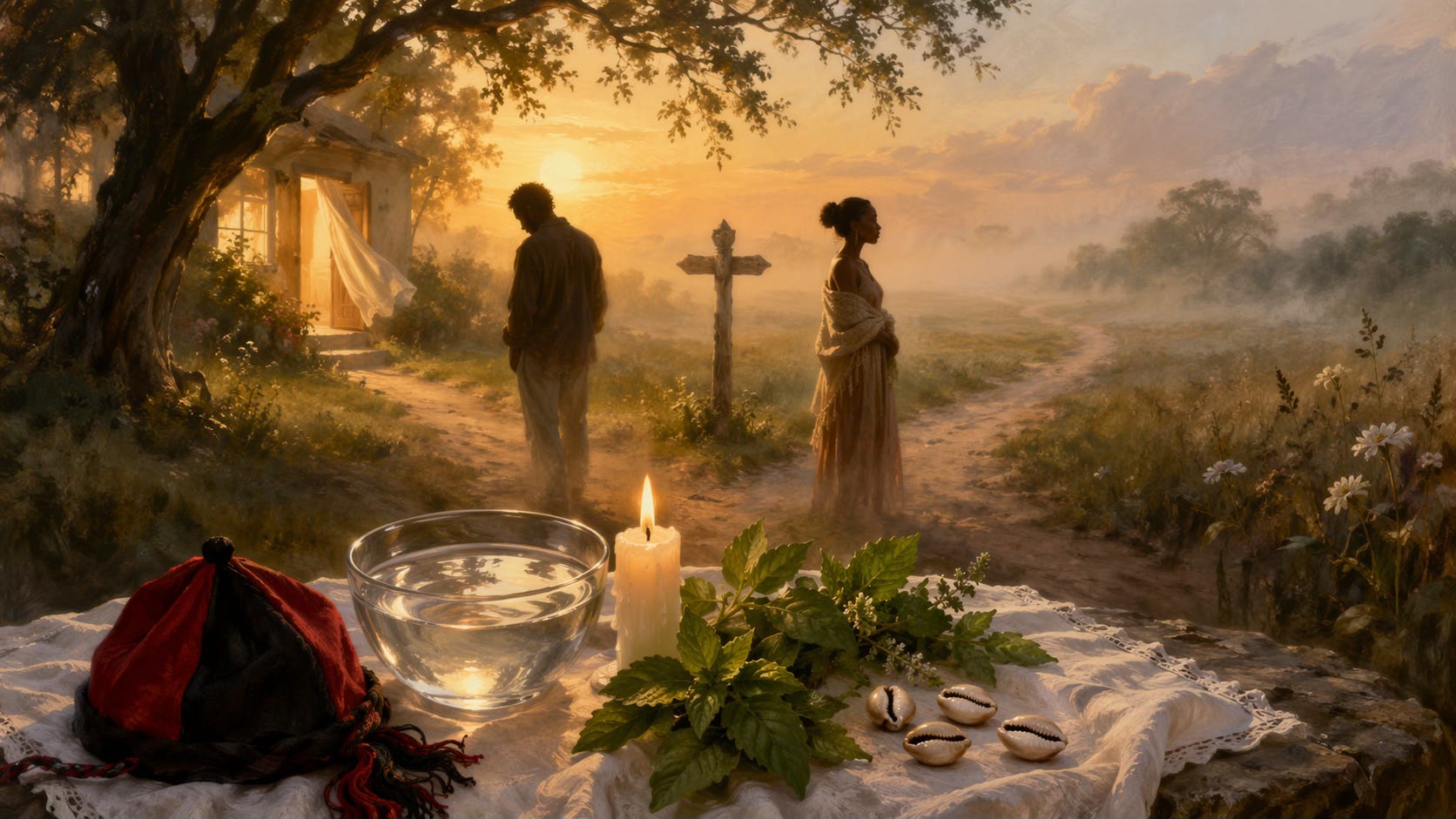
Beloved ones standing at the threshold of becoming,
Some forms of love do not arrive like visitors; they arrive like weather.
They gather at the edges of life so quietly that one cannot say, with any certainty, when they first crossed the threshold. A voice begins to linger after the call has ended. A name acquires temperature. The hours of the day, once arranged with practical indifference, begin to lean toward one person the way sunflowers lean toward afternoon light. Nothing official has been declared, nothing solemn has been sworn, and yet something has already changed in the atmosphere of the soul.
That is why the modern word situationship feels so precise and so insufficient at the same time. It names the suspended territory between friendship and commitment, between intimacy and declaration, between what is clearly being lived and what is still being denied the dignity of a name. It is the sealed box of modern romance: open in feeling, closed in language, somehow present and unconfirmed at once until speech finally lifts the lid.
Ifá would recognize that territory immediately.
Not because the word is ancient, but because the condition is. Human beings have always found themselves standing in the doorway of a bond that had already entered their lives before they were brave enough to say what it was. Ifá, which understands so much about thresholds, timing, destiny, and the moral weight of speech, does not rush to mock that uncertainty. It knows that not everything should be named too early. It knows that some truths ripen in interior darkness before they are fit for daylight.
But Ifá also knows that not every silence is sacred.
And that is where this conversation becomes more than romantic sociology. It becomes a question of character, alignment, and spiritual cleanliness. It becomes a question of when affection turns into consequence, when nearness begins making claims on a person’s peace, and when a bond that is still verbally undefined has already become real enough to wound, nourish, confuse, or transform.
Why Situationships Feel More Powerful Than Their Name Suggests
People often speak as if a relationship begins when two people agree on a title. The definition arrives, the world is informed, and only then does the thing become real. Yet anyone who has ever loved knows how false that can be. By the time people ask, “What are we?” whole worlds may already have been built in silence. Habits have formed. Expectations have rooted themselves in the body. A private rhythm has taken shape. Absence has become heavy. Presence has become medicinal.
In other words, the soul has often begun long before the mouth catches up.
This is why so many undefined bonds feel more serious than they are allowed to appear. They are not empty spaces. They are full spaces without public architecture. They are houses lived in before anyone has admitted who owns the key.
Ifá, with its refusal to confuse appearance with essence, would not reduce that to a label problem. It would ask a subtler and more unsettling question: when did energy begin gathering consequence here? When did tenderness begin arranging the inner life? When did access become influence? When did desire stop being an event and start becoming a condition?
Because once another person’s choices begin to alter your peace, your sleep, your expectations, your interior weather, something has already begun whether or not the world has been notified.
When Does a Relationship Truly Begin in Ifá?
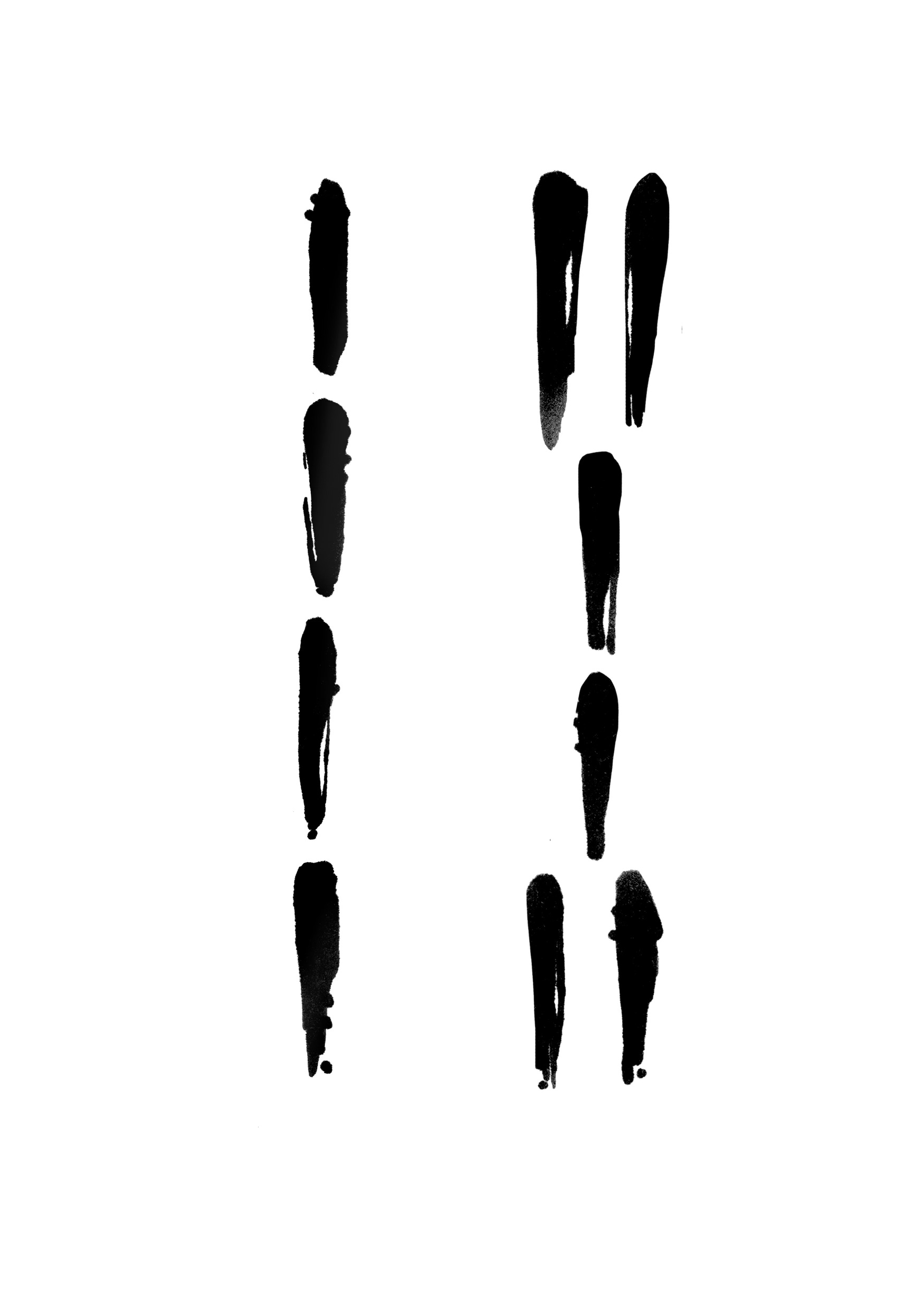
This is where Ìwòrì-Ogbè becomes a useful interpretive lens. It helps us sit with uncertainty without romanticizing disorder. Not everything is ready to be declared the moment it appears. Some paths reveal themselves gradually. Some truths arrive in fragments. Some people hesitate not because they are dishonest, but because they know that what is unfolding has not yet shown its final shape.
Such caution can be wise. But wisdom and evasion are not the same thing, and Ifá has never taught us to confuse them.
A fruit may require time on the branch, but time cannot be used forever as a ceremonial veil for fear. Sooner or later, delay begins to change its nature. It stops being incubation and becomes avoidance. It stops protecting truth and starts protecting comfort. It stops honoring complexity and starts feeding on someone else’s emotional labor.
That is why the real Ifá question is not simply, What do I feel? It is, What can my Orí stand in peace? For Ifá, intensity is never enough. Chemistry is never enough. Longing is never enough. A connection may be sweet, magnetic, and unforgettable, and still be wrong for the person carrying it. It may glow beautifully and still leave the spirit divided.
Orí asks for something deeper than excitement. It asks for alignment. It asks whether affection and dignity can live in the same room. It asks whether what is growing between two people can be carried without distortion.
Èṣù and the Trouble with Partial Truth
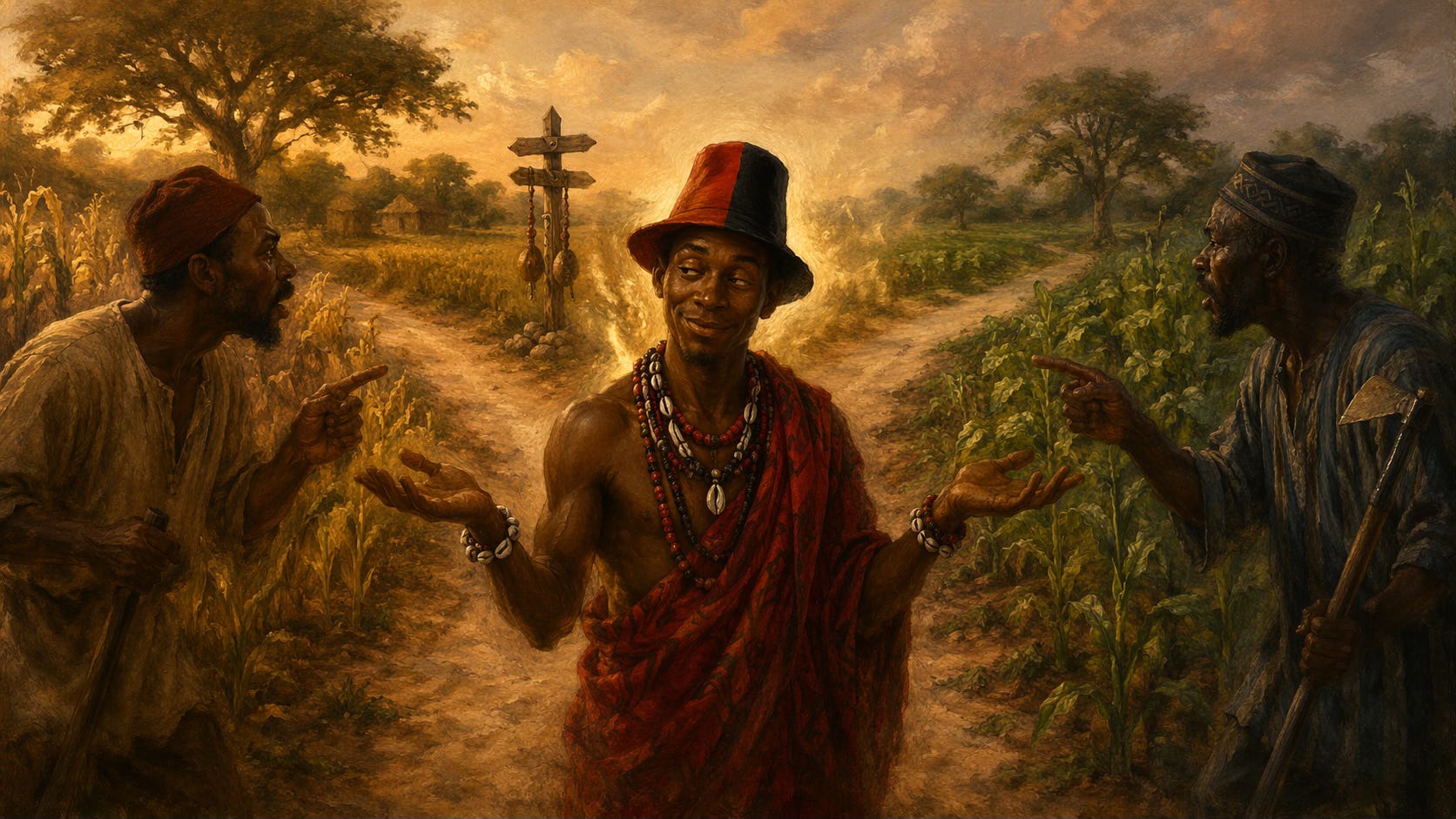
No one teaches this better than Èṣù, the keeper of the crossroads, the messenger who reveals what people do not know about themselves until they are forced to interpret what lies before them.
The old story remains as sharp as ever. Èṣù passes between two companions wearing a cap that appears one color from one side and another from the other. Each man tells the truth of what he has seen. Each man is also incomplete. The quarrel that follows is not born from blindness alone, but from the dangerous arrogance of partial truth when it believes itself to be total.
This is the hidden heartbreak of many modern almost-relationships.
One person says, with perfect sincerity, “We are obviously becoming something serious.” The other says, with equal sincerity, “We are simply enjoying what is here.” One experiences consistency as devotion in the making; the other experiences the same consistency as warmth without contract. One has already crossed inwardly into covenant; the other still stands with one hand on the gate.
And because both may be speaking from what genuinely feels true, the rupture that follows can be even more painful than an ordinary lie. It is not always deceit that breaks the heart most thoroughly. Sometimes it is the discovery that two people were loving each other through different stories.
That is why the question What are we? should not be dismissed as needy, modern, or shallow. In its cleanest form, it is not a plea for performance. It is a plea for shared reality. It is the soul asking whether it is safe to stop translating silence.
Sacred Timing or Fear in Disguise?
There are, of course, situations in which leaving something open is not only understandable but honorable. A bond may still be forming. Two people may be moving carefully. Life may be complicated, grief may still be fresh, healing may still be unfinished, and the truth of the relationship may be real without yet being stable enough for public definition.
Ifá is not a theology of haste. It knows the dignity of timing. But timing remains sacred only while it remains truthful.
It is truthful when both people understand that the bond is still open. It is truthful when the openness is spoken plainly rather than hidden behind mood, charm, or suggestion. It is truthful when behavior does not quietly exceed what has actually been admitted. It is truthful when neither person is being asked to carry the emotional weight of a relationship that the other refuses to acknowledge. Once those conditions disappear, ambiguity begins to rot.
It becomes corrosive when intimacy deepens but responsibility does not. It becomes cruel when one person enjoys the warmth, loyalty, and access of devotion while preserving the legal fiction that nothing has been promised. It becomes spiritually untidy when confusion protects one person and erodes the other. And it becomes especially dangerous when the person who is “waiting” begins to lose not only clarity, but self-respect.
This is where the proverb Ìwà lẹ́wà must be allowed to judge the matter: character is beauty. Not intensity. Not seduction. Not poetic speech. Not the brilliance of chemistry under moonlight. Character.
Love becomes beautiful not only because it is deeply felt, but because it is cleanly carried.
What Belongs to Us, and What Belongs to the World?
And yet one must also speak gently here, because people do not enter love as blank pages. They arrive with ancestral fears, family pressures, migration fatigue, old betrayals, religious injury, social scrutiny, and the exhaustion of modern life. Sometimes people postpone naming a bond because they are manipulative. Sometimes they postpone it because they are frightened of repeating an inherited pain. Sometimes the heart is ready while the social world around it is still full of noise.
That distinction matters, especially in diasporic spiritual communities where relationships are rarely allowed to remain private for long. They are watched, interpreted, blessed, doubted, advised upon, and sometimes burdened by expectations that do not belong to the people inside them.
So the question becomes larger than romance: what is truly ours to choose, and what has the world tried to choose for us?
Ifá does not solve that by giving us a crude moral rule. It does something more demanding. It returns us to responsibility. We may not control the timing of every revelation, and we may not control the pressure of the surrounding world, but we do control whether we speak honestly. We control whether our fear becomes another person’s confusion. We control whether we use tenderness cleanly or consume it carelessly. We control whether our uncertainty is offered as truth or disguised as style.
That is why the proverb Súúrù ni baba ìwà is so important here: patience is the father of character. Patience, in this sense, is not endless waiting. It is not self-erasure made to look spiritual. It is the discipline of not forcing what is still ripening, while also refusing to call decay by the noble name of process.
A patient person can wait without disappearing.
A person of character can be unsure without becoming misleading.
A clear spirit can love deeply without building a permanent home in uncertainty.
Ogbè-Yẹ̀kú and the Courage to Discern

If Ìwòrì-Ogbè helps us think about the mystery of becoming, Ogbè-Yẹ̀kú helps us think about the moral threshold of choosing. It brings us to the sobering point where desire can no longer be the only witness. One must ask whether a bond is fit to be entered, whether sweetness is supported by truth, whether attraction is accompanied by responsibility, and whether what feels spiritually intense is actually spiritually sound.
This is often the moment people try hardest to remain vague, because clarity changes the moral temperature of the room. Once a thing is named, it can no longer hide behind possibility. It must reveal its structure. It must show whether it has roots, whether it can hold weight, whether it knows the difference between closeness and commitment.
And that, perhaps, is why so many people linger in the half-light. The half-light is merciful to fantasy. It allows us to believe many things at once. It allows us to be chosen and unchosen, held and unclaimed, cherished and deferred. It permits us to live, for a while, inside contradiction.
But the soul cannot do that forever without cost. At some point, the body begins to know what the mouth is still avoiding. Sleep is altered. Prayer changes shape. The heart becomes fatigued from translating signals that should have become speech long ago. And that is usually the hour in which Orí, tired of being negotiated against, begins quietly asking for dignity.
An Ifá-Inspired Ritual for Clarity at the Threshold
When the heart is standing in that kind of doorway, it helps to return to simplicity. Set a glass of cool water before your Orí. Light one white candle. Wash your hands in clean water touched with fresh basil or mint, according to the custom and comfort of your house. Touch a little of that water to your forehead and, if it is appropriate in your practice, to the threshold of your door.
Then sit with yourself long enough for performance to fall away.
Say softly:
May my Orí prefer truth to confusion.
May I not mistake longing for alignment.
May what is meant for me arrive with peace.
May what is not meant for me lose the power to occupy my spirit.
Then write, without decoration and without excuse, the answers to three questions: what has already begun here; what truth have I postponed; what boundary would restore my dignity.
Fold the paper. Place it beneath the glass of water overnight. Read it again the next morning. Not to force destiny. Not to make yourself irresistible. Not to bend another heart by spiritual means. Only to gather yourself back from the places where uncertainty has been spending you.
Because that is the deeper teaching hidden inside so many situationships: not every undefined bond is false, but every soul deserves truth.
When the Heart Can No Longer Live in the Doorway
In the end, Ifá does not instruct us to rush every mystery. Some loves do need time. Some truths do need shelter before they can survive the weather of the world. But Ifá also refuses to glamorize confusion merely because modern life has learned to decorate it with clever language.
There comes a moment when every threshold asks the same question: are you entering, are you leaving, or are you only surviving on hesitation? That is the moment in which character reveals its face.
And so perhaps the deepest lesson is this: a situationship is not resolved only when someone says yes or no. It is resolved when speech, action, timing, and spirit stop contradicting one another. Love may begin in mystery; that has never been the danger. The danger begins when mystery becomes a curtain behind which responsibility is indefinitely postponed.
May your Orí keep you close to what is clear, even when clarity arrives slowly. May your heart remain open without becoming careless with itself. And may you never be so hungry for love that you mistake the crossroads for a home.
May your Orí keep you near what is true, and may your heart never mistake confusion for destiny. Àṣẹ o.
Babá Tilo de Àjàgùnnà
DAILY IFÁ
Editorial note: This reflection uses Ìwòrì-Ogbè and Ogbè-Yẹ̀kú as interpretive lenses rather than as a substitute for divination. Mixed odù are listed distinctly in Ifá reference materials, and lineal emphases vary by house. The proverb anchors “Ìwà lẹ́wà” and “Súúrù ni baba ìwà” are standard Yoruba wisdom sayings in accessible references.
Devine Timing
.Brilliantly written
ASE000