


Introduction: A Debt of Love
Greetings, sons and daughters of Orunmila! This week, we delve into a Yoruba myth that explores the delicate dance between love, responsibility, and fate. The tale of Dangbe, the lovelorn python, serves as a powerful reminder that the path to fulfillment can be fraught with unexpected twists and turns.
The Myth about the Phyton, the Snake, the Leopard and the Hunter
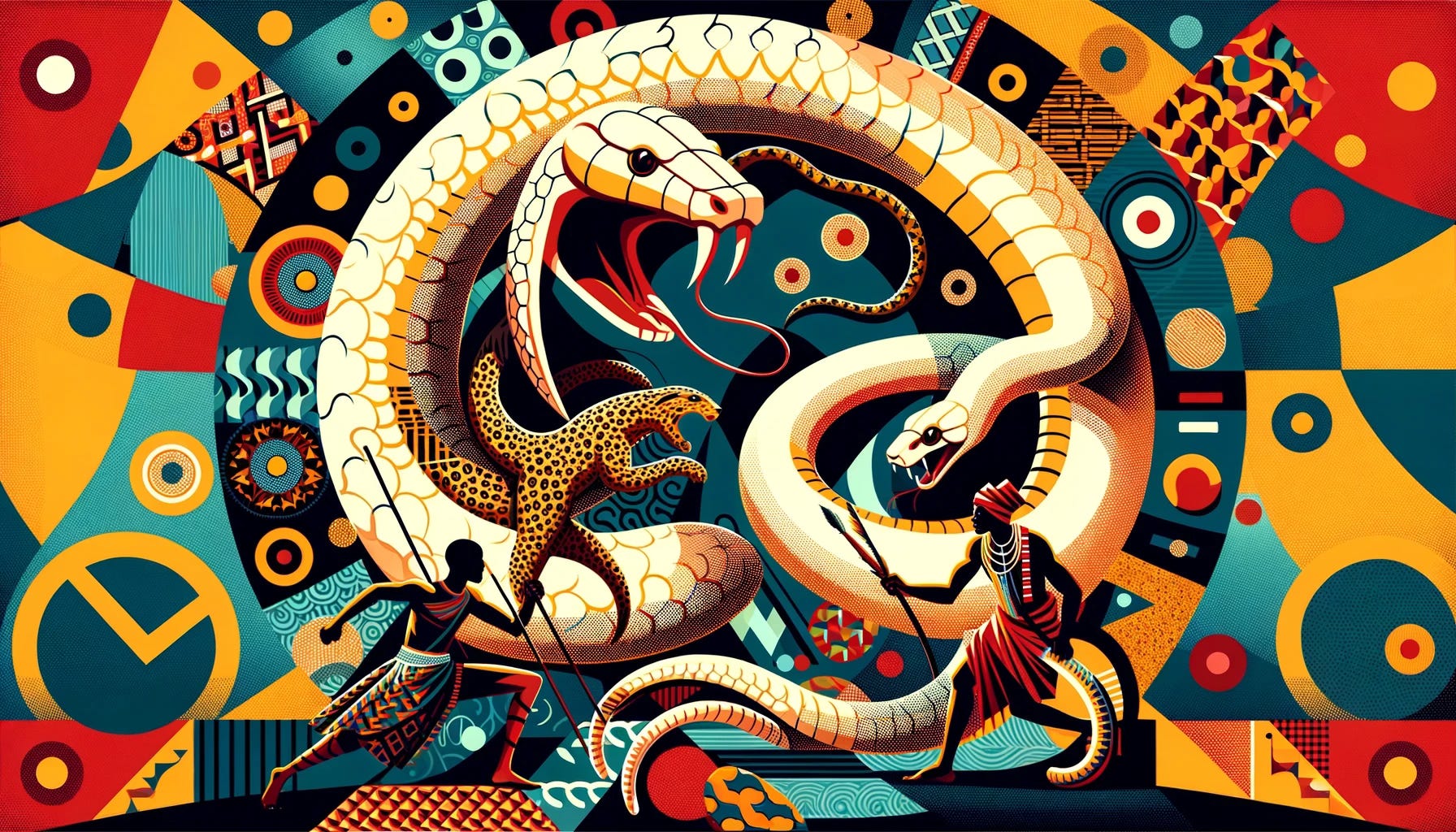
Dangbe, the python, driven by his desire to marry the daughter of Dawn, finds himself entangled in a web of debt and servitude. He borrows money from three different entities - Amanõnu the snake, Kpó the leopard, and the Hunter - each demanding daily service in exchange for a dowry payment.
Dangbe diligently fulfills his obligations, working tirelessly for each creditor at specific times throughout the day. The burden of these tasks, however, begins to wear him down.
Desperate for liberation, Dangbe seeks the help of a diviner. Through a prescribed ritual, the diviner attempts to free Dangbe from his binding agreements.
Meanwhile, fate intervenes. The Hunter, seeking prey, encounters Kpó and the two end up killing each other accidentally. This unexpected turn of events frees Dangbe from his debts to both Kpó and Amanõnu, as they are no longer alive to claim their loans.
With his burdens lifted, Dangbe finally celebrates his long-awaited wedding, a reminder that sometimes, the path to freedom can take unexpected twists and turns.
Interpretation of the Yoruba Myth: A Debt of Love
This week's Ifá story explores the concept of Ire (good fortune) and Osogbo (misfortune) intertwined with the pursuit of love. Here's a breakdown for our global Ifá community:
Dangbe's Impulsive Leap: Our protagonist, the python Dangbe, embodies the power of passionate desire. His eagerness to win Dawn's daughter blinds him to the potential pitfalls of borrowing for love. This aligns with the concept of "Ìdí Burú" (good intentions) leading to "Ìwà Reregìn" (unforeseen consequences).
The Burden of Debt: Each creditor, Amanõnu, Kpó, and the Hunter, represent different burdens we take on in life. Amanõnu, the snake, could symbolize hidden costs within relationships. Kpó, the leopard, might represent the dangers of taking on too much physical exertion. The Hunter signifies the potential for violence lurking in competition.
The Role of the Diviner: Dangbe's decision to seek a diviner highlights the importance of Ifá consultation in navigating life's challenges. A skilled Babalawo (Ifá priest) can offer guidance and potentially perform Ebo (ritual sacrifice) to break negative cycles.
Fate's Unexpected Intervention: The fight between Kpó and the Hunter exemplifies the concept of "Àìkú" (untimely death). It serves as a reminder that fate, or "Àyànmó" (destiny), can bring both hardship and unexpected liberation. This aligns with the teaching of "Ìpín" (one's predetermined portion in life).
The Unexpected Twist and the Power of Character: While Dangbe's initial decision to borrow was impulsive, the myth emphasizes the importance of his honesty and faith. He diligently fulfilled his obligations, showcasing perseverance and respect for his agreements. This stands in stark contrast to the greed of the Leopard and the Hunter, whose own actions ultimately led to their demise. The story shows that mistakes can be mitigated through character and that negative forces can be overcome by positive ones.
Healing Through Right Action: Dangbe's eventual wedding signifies the achievement of Ire. The myth reminds us that liberation can come from unexpected sources, and sometimes letting go of control allows fate to work its magic. It also shows that honest effort and good character can heal the wounds of bad decisions.
The Symbolic Python: Interestingly, the python in Yoruba tradition can also embody the spirit of Oshossi, the Orisha of the hunt. Oshossi is renowned for his abundance and his unerring aim, symbolized as the "hunter of one single arrow." Through this lens, Dangbe's predicament takes on a new layer of meaning. Does his initial failure to secure his love through his own means (his "one arrow") foreshadow his need to rely on external forces? Perhaps Dangbe's journey represents the importance of seeking guidance and collaborating with other forces, even when we possess inherent skills and potential. Note, that the Hunter may symbolise the outside and the Python the inside of a human being. Or, in different words, the balance between the inside and the outside, the action and the reaction, the actions and the emotions. Some traditions relate the python to Orishá Oshumaré (Dan, Bessen) who is seen as seen as a hunter, too. Oshumaré is the Orishá of transformation and abundance, often represented by a snake and a rainbow.
Lessons Learned
This myth is a cautionary tale for navigating love and finances. It encourages adepts to:
Seek Guidance: Use Ifá divination to make informed decisions about relationships and financial commitments.
Manage Expectations: Understand the potential consequences of desires and approach them with a balanced perspective.
Maintain Balance: Strive for sustainable practices in offerings and actions to secure blessings from Orishas.
Embrace the Unexpected: Be open to the influence of fate (Ìpin) and recognize unexpected turns as potential opportunities.
Always work on Good Character.
Conclusion
As we close this chapter, let us carry the wisdom of the myth forward. May the story of Dangbe serve as a guiding light as we navigate the complexities of love, finances, and our own destinies.
Remember, through Ifá divination, we can seek clarity and make informed choices. By approaching our desires with a balanced perspective and maintaining integrity in our actions, we cultivate the fertile ground for blessings to flourish. Let us embrace the unexpected turns that life throws our way, for within them may lie hidden opportunities for growth and liberation.
May Orunmila's wisdom continue to guide your paths. Asé!
Babá Tilo de Àjàgùnnà
DAILY IFÁ
Note: To understand the characteristics of Orishá Oshóssi (Odé) I recommend my latest blog about him.