


Esteemed Seekers of Wisdom,
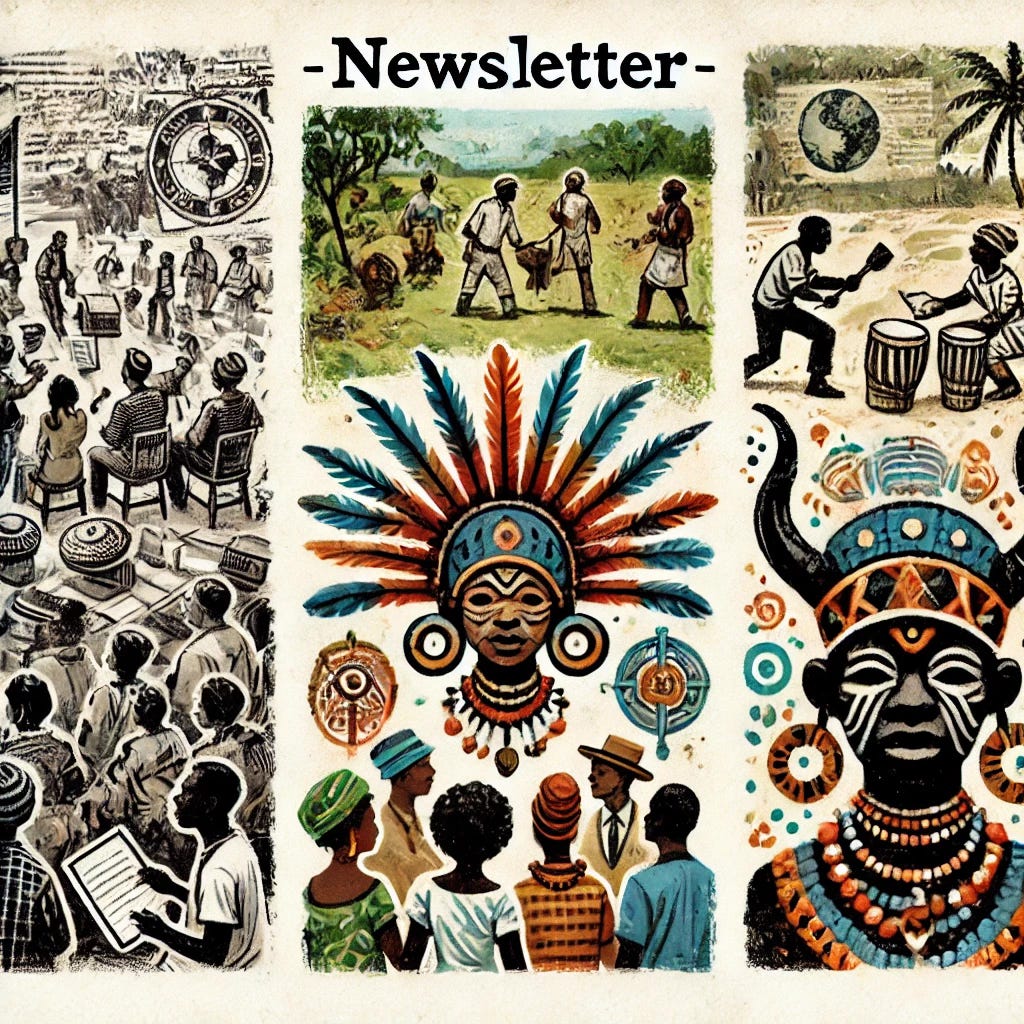
In these times of growing skepticism towards foreigners, minority spiritual traditions and rising nationalism, I find myself reflecting deeply on our collective journey as a global community. This newsletter is born from my own contemplation and concern about how we perceive and engage with the movement of people across borders. Through the rich tapestry of Ifá traditions, we can uncover profound insights that guide us in navigating these challenges with grace and wisdom.
Throughout history, humanity has been on the move. People have migrated across continents, seeking new opportunities, escaping hardship, or simply following the call of adventure. This movement of people has had a profound impact on cultures and traditions worldwide, including the rich tapestry of Ifá-Orishá-based practices like Santeria and Candomblé, Umbanda, Palo, Vodou and many others.
Within the literary corpus of Ifá itself, we find seemingly contradictory views on those who come from afar. Some myths portray foreigners with suspicion, while others celebrate the exchange of knowledge and skills that migration brings. Let's explore these contrasting perspectives and discover how they can guide us in navigating the realities of migration in our modern world.
Beyond these specific traditions, it's important to remember that the concept of "foreigner" is itself a relative one.Diaspora communities, by their very nature, are rooted in a place that is not their ancestral home. We, the descendants of those who migrated, carry within us a blend of traditions, enriching the cultural landscape wherever we find ourselves.Ultimately, though we may come from different places, we share a common humanity. So, with this in mind, let's delve deeper into the wisdom of Ifá regarding the movement of people...
Fear of the Unknown: Navigating Unfamiliar Waters
The Yoruba concept of ayé (the physical world) and òrun (the spiritual world) offers a lens through which we can understand the initial apprehension some might feel towards foreigners. Imagine a stranger arriving from a distant land – their customs, language, and beliefs might seem alien, existing outside the familiar framework of ayé and òrun. This unfamiliarity can breed suspicion, as reflected in the Odu Ifá, Owonrin Meji.
This particular Odu speaks of a journey fraught with fear and distrust. The protagonist encounters unknown entities and worries about the dangers that might lie ahead. The proverb associated with Owonrin Meji,
"Òhun tí a rí kò ní ìdí tí a ó fi rìnwó lọwó."
(There is no reason to fear what we can see),
reminds us that open communication and understanding can bridge the gap between the known and the unknown.
Foreigners as Enemies: Myths and Misconceptions
In some Ifá myths, foreigners are portrayed as disruptive forces, threatening the established order. One such tale involves Ogún and Inle, two powerful deities. In this story, a foreigner arrives in their land and disrupts the delicate balance of harmony (see the myth in more detail below). This myth serves as a cautionary reminder of the potential consequences when we fail to integrate newcomers with respect and understanding.
The proverb,
"A kì í fi ọwó ò̟ sàn sàn gbà ẹni tí a kọ́ nì ìlú rè."
(We don't welcome a stranger with open arms in his own town [be cautious of outsiders]),
highlights the underlying fear and suspicion that can arise when faced with unfamiliar cultures. However, it's crucial to recognize that these myths and proverbs often reflect specific historical contexts and may not always represent the broader values of Ifá traditions.
Enrichment Through Migration: Embracing Diversity
In contrast to the narratives of fear and conflict, other Ifá myths emphasize the positive aspects of migration. The Odu Ifá,Irosun Meji, speaks of cultural exchange and the importance of integration. In this story, two individuals from different backgrounds come together, sharing their knowledge and skills, ultimately leading to a more prosperous and harmonious society.
The proverb,
"Ìpín rere la fi ń da ilé."
(A house is built with good character [meaning different cultures contribute to a society's well-being]),
underscores the notion that diversity enriches our communities. Just as a house is constructed with various materials, each contributing to its strength and beauty, so too does a society benefit from the blending of different cultures and perspectives.
Finding Common Ground: Unity in Diversity
Ifá traditions teach us that Ìwà (character) is far more important than one's origin. Regardless of where we come from, we are all bound by shared human values and experiences. The proverb,
"Ẹni tí ó bá ní ìnú rere kì í fi ìwà rẹ̀ șe ìka."
(A good person doesn't use their character to cause trouble [promote unity regardless of origin]),
reminds us to focus on the positive qualities of individuals rather than making assumptions based on their birthplace or cultural background.
Conclusion: Embracing Humanity
As we navigate the complexities of migration in today's world, let us draw inspiration from the wisdom of Ifá traditions.While acknowledging the challenges and potential conflicts that may arise, let us also embrace the opportunities for growth and enrichment that migration brings.
Remember, we are all part of the same human tapestry, woven together by the threads of our shared experiences and aspirations. By fostering understanding, respect, and appreciation for diversity, we can create a more harmonious and just world for all.
With the Blessings of the Orishas, and in the Spirit of Ọ̀rúnmìlà’s Wisdom,
Baba Tilo de Àjàgùnnà
DAILY IFÁ
The Myth of Ogun and Inle: A Balancing Act
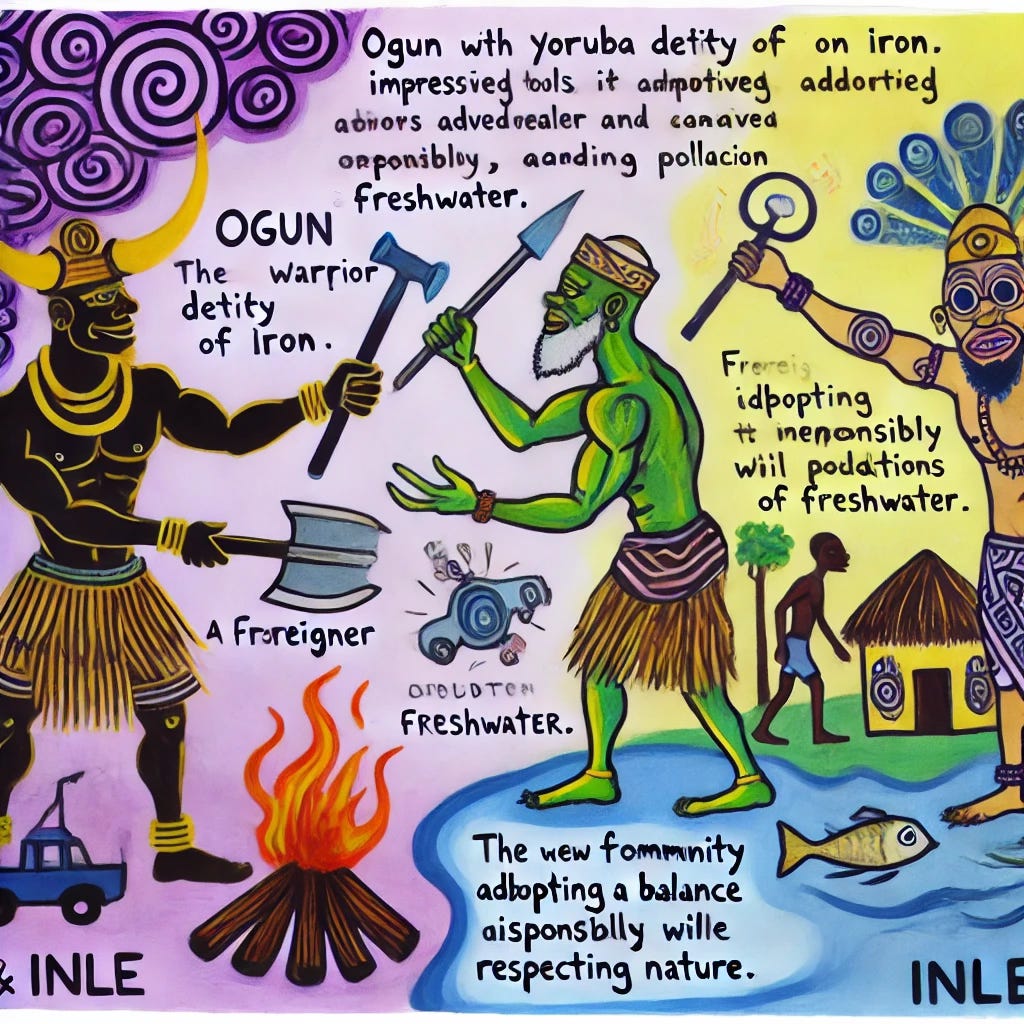
In the Yoruba pantheon, a tale unfolds about the powerful duo of Ogun and Inle, representing a delicate balance between progress and harmony. Ogun, the fierce warrior and deity of iron, embodies change and innovation. Inle, the wise healer and guardian of freshwater, represents peace and stability. Their contrasting energies maintain order within the community.
One day, a foreigner arrived from a distant land. This stranger possessed advanced tools and techniques unlike anything the people had seen before. Intrigued by Ogun's nature, the foreigner presented these advancements, promising progress and efficiency. Ogun, ever eager for innovation, was immediately impressed. He saw the potential for these tools to improve their lives and readily embraced the newcomer.
However, Inle, with his keen eye for balance, felt a sense of unease. He observed how the community rapidly adopted the foreigner's methods, neglecting their traditional practices and disrespecting the natural world. The harmonious rhythm of life began to falter. The rivers, once teeming with life due to Inle's blessings, became polluted by careless use of the new tools.
Seeing the disruption, Inle approached Ogun. He expressed his concern about the rapid change and the potential consequences of neglecting their traditions. Ogun, initially dismissive, argued that progress was necessary for their survival. However, Inle persisted, reminding him that true progress should not come at the cost of their natural world or the established balance within the community.
A heated debate ensued between the two deities. Finally, Ogun, recognizing the wisdom in Inle's words, understood the importance of finding a middle ground. Together, they devised a solution. They incorporated the foreigner's advancements but with modifications that respected the natural world and their existing traditions. They ensured the community learned to use the new tools responsibly, maintaining harmony and progress in balance.
This myth serves as a reminder of the importance of considering different perspectives. While change and innovation are essential for growth, so is maintaining a connection to tradition and respecting the natural order. Ogun and Inle's story teaches us that true progress lies in finding a harmonious blend between these forces.