


Dear Friends and Devotees of the Orishá Traditions,
In the ever-unfolding journey of our spiritual practice, stories from our rich Yoruba heritage serve as beacons, guiding us toward deeper understanding and connection. Today, I want to revisit a tale of wisdom, not just as a narrative but as a mirror reflecting the virtues we strive to embody in our Orishá traditions. This is a story that teaches us to appreciate the gifts of those around us, to value seniority, and to understand the profound impact of loyalty and resilience.
The Wisdom of a King and His Servant
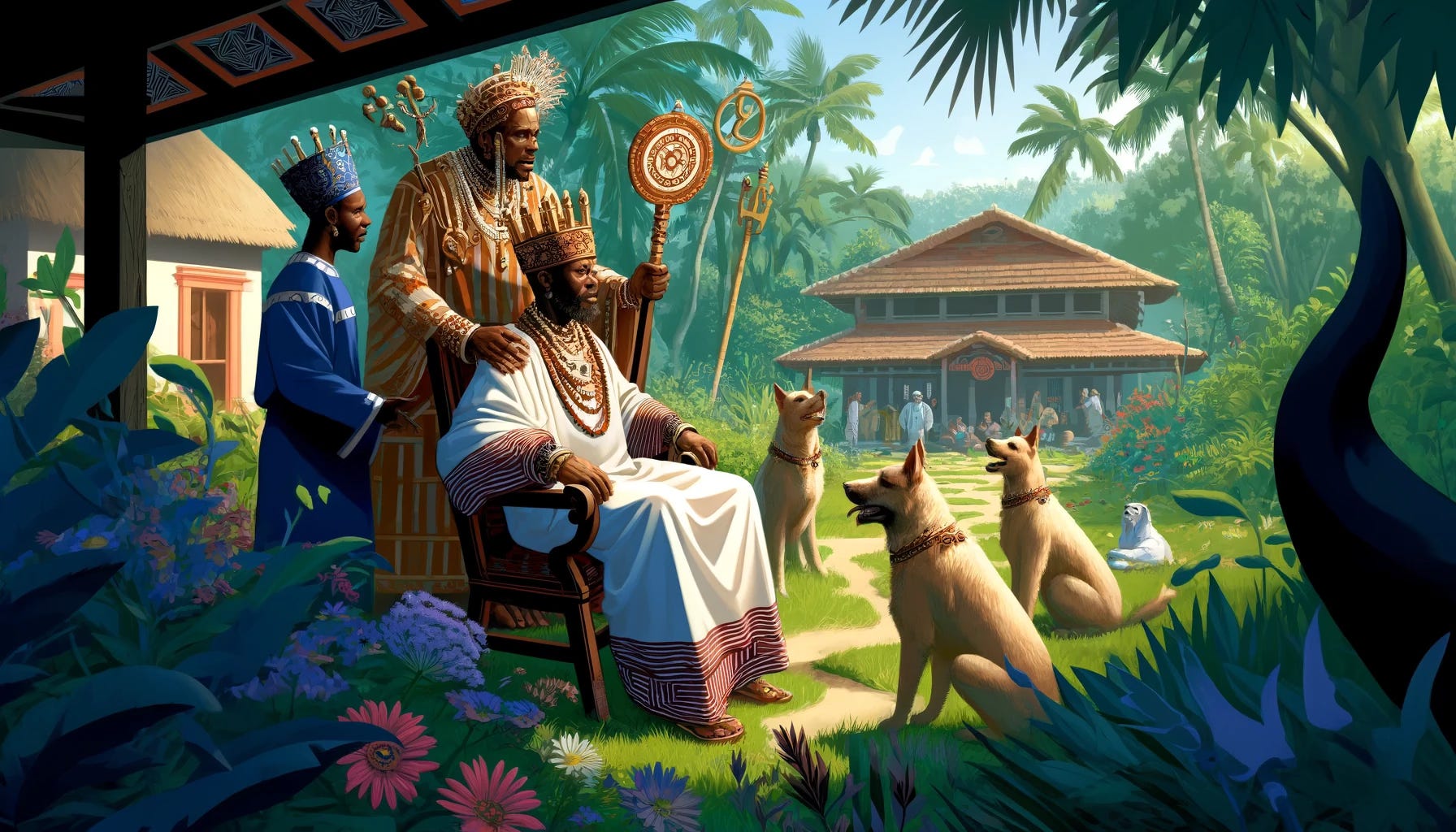
In a time long past, within the Yoruba kingdom, there lived a king renowned for his strictness and an unwavering decree: any subject, regardless of their status or past loyalty, who erred or displeased him was to be thrown to the wild dogs that roamed his vast gardens. This decree was known throughout the land, and it instilled a deep fear in the hearts of his subjects, ensuring obedience but also distancing their affection.
For many years, the king's most loyal servant, a man of wisdom and age, served him without falter. His devotion was unmatched, his service impeccable. But fate, as it often does, wove a twist into his tale. One day, due to an unfortunate misstep, this servant found himself on the wrong side of the king's temper. True to his decree, the king ordered that the servant be thrown to the dogs the following dawn.
However, the servant, with a calmness that belied his years, requested a boon. "My king," he said, "grant me but seven days before my fate is sealed." Intrigued and feeling a momentary spark of mercy, the king agreed.
Over the next seven days, the servant, instead of wallowing in despair, approached the gardens where the wild dogs roamed. With caution and patience, he began to feed them. Day by day, the wild beasts, once symbols of certain death, grew accustomed to his presence. Their growls turned to whimpers, their fierce eyes softened, and they started to greet him with wagging tails rather than bared teeth.
On the seventh day, as the kingdom watched, the servant was led to the gardens, but instead of being mauled, he was met with licks and gentle nuzzles from the dogs. The crowd gasped, and the king, from his high throne, felt the first stirrings of something he had not anticipated: doubt in his own decree.
The servant, standing amidst the wild dogs now tamed by his kindness, turned to the king and said, "My lord, these beasts, feared by all, were turned to friends with but a week of compassion. Yet, I, who have served you faithfully for decades, was condemned to death for a single mistake. Which of us, then, truly understands loyalty?"
The king, struck by the truth in the servant's words, felt a profound shame. The silence that followed was not just a reflection of the crowd's awe but of a king confronting his own failings. In that moment, the king learned that loyalty and respect cannot be commanded through fear but must be nurtured with understanding and mercy.
He stepped down from his throne, approached the servant, and in front of his subjects, he knelt. "You have taught me more today than I have learned in my lifetime of rule," the king declared. "Henceforth, let it be known that justice in our kingdom will be tempered with mercy, and loyalty will be met with loyalty."
From that day forward, the king ruled with a wisdom and fairness that was talked about for generations. And the servant, his loyalty never wavering, stood by him, a reminder of the day when wild dogs taught a king the true meaning of allegiance.
A Lesson for Our Times
This story illuminates a powerful truth: loyalty born of fear is brittle, while that nurtured by understanding and kindness is unbreakable. The king, moved by the servant's wisdom, learned that true leadership and spiritual guidance are rooted in mercy, compassion, and reciprocal loyalty.
Applying the Tale's Wisdom
As devotees of the Orishá traditions, we are called to reflect on this tale's relevance in our lives and communities. How often do we act out of fear rather than love? Do our actions reflect the mercy and understanding we seek from the Orishás? This story serves as a reminder to embody the virtues we revere, fostering a community where compassion prevails over condemnation, where understanding strengthens our bonds, and where our loyalty to each other and the Orishás is deepened through acts of kindness.
In Our Practice and Beyond
Let us carry the essence of this tale into our rituals, our prayers, and our interactions with one another. May our offerings be made with genuine love and our prayers filled with the desire for mutual upliftment. Let this story inspire us to act with compassion and understanding, remembering that the strength of our community lies in our shared devotion and mutual respect.
A Call to Action
I encourage each of you to reflect on this tale and its teachings. Share your thoughts and experiences with our community, whether through acts of kindness, moments of understanding, or stories of loyalty that have touched your lives. Let us grow together, guided by the wisdom of our ancestors and the enduring lessons of the Orishá traditions.
Closing Thoughts
As we move forward, let us remember the servant's wisdom and the king's humility. May their story remind us of the power we hold to transform fear into love, to turn punishment into mercy, and to change obedience into true loyalty.
Together, may we continue to grow, learn, and thrive in the light of the wisdom passed down to us.
In unity and devotion,
Baba Tilo de Àjàgùnnà
DAILY IFÁ
Note: Seniority as a Pillar of Our Tradition
Seniority holds a special place within the Candomblé and Santería traditions. It is not just a measure of time but a testament to a devotee's loyalty, resilience, and endurance. Those who have walked the path longer have not only shown a commitment to our shared beliefs but have also faced and overcome countless challenges. Their journey stands as a living testament to the strength and steadfastness required to uphold our spiritual values.
Note: Similar theme from Esopo's Fables
There is a well-known story with a similar theme from Esopo's Fables, a collection of Greek fables. In the fable, a king has a loyal servant who grows old and weak. One day, the servant accidentally spills a bowl of soup on the king. Infuriated, the king condemns the servant to be thrown to the lions. See versions of the fable.
Recent Blogs on www.daily-ifa.blog
Unveiling the Sacred Nganga: The Art of Creating Palo Monte’s Spiritual Vessels