


Ọmọ Àwòran, ẹ káàbọ̀! (Children of the Sacred, welcome!)
This greeting highlights the sacred connection of the readers to the spiritual path, adding a warm, reverential tone to the newsletter.
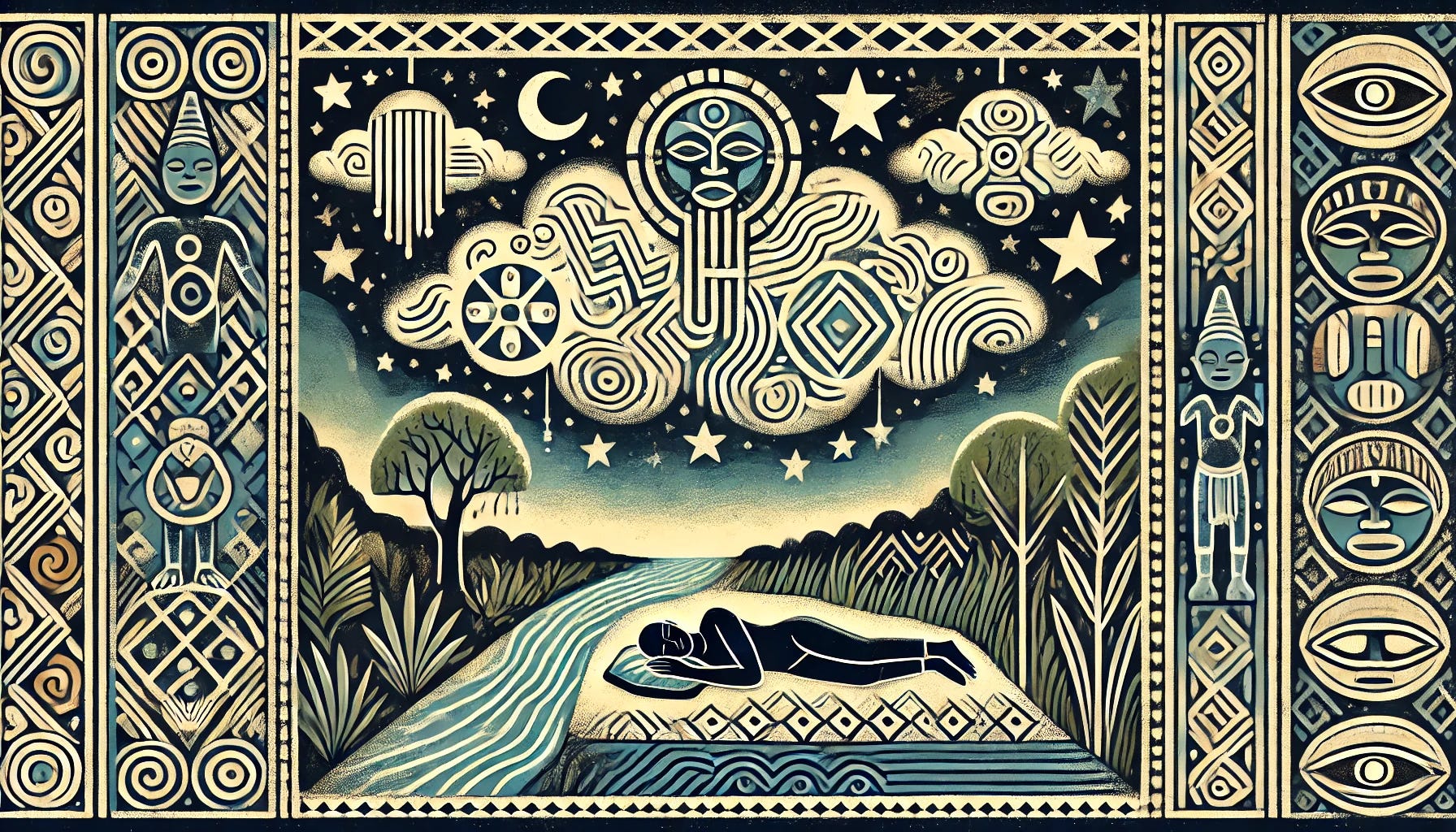
Dreams have always been a mysterious part of our lives, filling our nights with stories, symbols, and sometimes, confusion. In the tradition of Ifá, dreams are not just random images; they are messages, reflections of the deeper connections we hold with the spirit world. But how do we understand the difference between dreams and visions? Between dreams, wishes, and hope? Should we act on them? Let’s dive into what Ifá and the Orishás have to say.
The Difference Between Dreams and Visions
In the world of Ifá, having a dream and experiencing a vision are not the same. Dreams often come to us passively, in our sleep, as messages from our subconscious or the spiritual realm. Visions, however, are active—they are moments when divine clarity pierces through our consciousness, often in waking life, guiding us with purpose.
Odu Ifá, Oyeku Méjì, says:
"The world of dreams is vast, but only a few see the clear path."
This verse reminds us that while dreams can be filled with various symbols and feelings, a vision is distinct. It is direct, a revelation from the Orishás or ancestors, guiding us to act with certainty. A dream might lead us to reflection, but a vision calls us to action.
The Difference Between Dreams, Wishes, and Hope
Dreams are often personal; they come from the recesses of our minds, sometimes without warning or control. Wishes, on the other hand, are tied to our desires—things we long for. Hope is the energy that fuels both dreams and wishes, an unwavering belief in the possibility of transformation.
In Odu Ogbe Sa, Ifá tells us:
"One who hopes has already walked halfway to their destiny."
Hope keeps us moving forward, but it is the power of Ifá and the Orishás that turns wishes into concrete realities. Dreams reflect our inner world; wishes express our desires; hope binds them with faith.
Should We Make Dreams Come True?
Not every dream is meant to become a reality. Some dreams are symbolic, guiding us through the mysteries of life, while others point to possibilities we can act upon. In the myth of Orishá Obatalá, we see how dreams and the desire to create shaped the world. Obatalá dreamed of molding humanity from clay, a vision given to him by Olodumare. But before taking action, Obatalá sought wisdom from Ifá, ensuring that his dream was aligned with divine purpose.
The lesson here? Consult Ifá before acting on dreams. Some dreams are the seeds of change, but we must make sure they are planted in the right soil.
Should We Turn Dreams into Visions?
The transition from dream to vision requires clarity, intention, and divine guidance. In Odu Irosun Meji, Ifá speaks of a person who dreamt of riches but failed to see that their vision was in the community around them, not in material wealth. Dreams become visions when they align with our Orí, the divine path we are destined to follow. When dreams are grounded in wisdom and purpose, they can lead to transformative visions.
What Does Odu Ifá Say About Dreams and Visions, Wishes and Hopes?
Ifá is rich with verses that speak of dreams, visions, wishes, and hopes. Odu Ofun Méjì says:
"The eyes that close in dreams may open to visions."
This reminds us that while dreams are often symbolic, they can lead to powerful insights if we interpret them wisely. Wishes and hopes must be tempered with wisdom, as reckless desires can lead us astray.
In Odu Otura Niko, Ifá cautions:
"One who chases their wishes without consulting their Orí may find themselves running in circles."
This verse emphasizes the importance of seeking spiritual guidance before pursuing our wishes. Orí, Ifá, and the Orishás must be consulted to ensure that what we pursue is aligned with our higher purpose.
Which Orishás Stand for Dreams?
Among the Orishás, Obatalá is often associated with dreams and visions. As the Orisha of wisdom and creation, Obatalá’s dreams were the foundation for the human race. In one myth, Obatalá dreamt of a perfect creation but, in his eagerness, became intoxicated and created humanity imperfectly. The myth teaches that while dreams have power, they must be carried out with clarity and patience.
Another Orisha linked with dreams is Orí. Orí is our personal destiny, and many times, dreams are direct communications from Orí, showing us the way forward or warning us of potential dangers. Ifá teaches us to honor and communicate with our Orí, for it is through Orí that many of our dreams and visions take shape.
Using Dreams as a Powerful Tool in Life
Dreams are a powerful tool in the practice of Ifá and Orishá traditions. They provide guidance, insight, and connection to the spiritual world. But how do we use them wisely?
1. Keep a Dream Journal: Recording your dreams allows you to reflect on their symbols and meanings over time. Patterns may emerge that guide you in your waking life.
2. Consult Ifá or a Diviner: When a dream feels particularly strong or confusing, consult a babalawo or iyanifa. Through divination, you can gain clarity about whether the dream is a call to action, a warning, or simply a reflection of your inner world.
3. Pray to Orí Before Sleep: Before going to bed, ask your Orí for guidance in your dreams. This strengthens the connection between your waking life and the spiritual messages you receive during sleep.
4. Turn Dreams into Action: When dreams align with your purpose, they can become powerful visions. Act on them with wisdom and the guidance of the Orishás.
In Conclusion
Dreams are more than random thoughts that occur while we sleep. In the Ifá tradition, they are messages, tools, and guides. But we must be discerning—some dreams are meant to be pondered, while others are meant to be acted upon. Visions are born from clarity and alignment with Orí, and with the wisdom of Ifá, we can turn our dreams into powerful steps on the path to our destiny.
May your dreams lead you to the blessings of Ifá and the Orishás.
Aṣẹ.
Ẹ kúbọ̣ ooo,
Babá Tilo de Àjàgùnnà
DAILY IFÁ
Latest BLOG: About Orishá Olokun
More About Odu Oyeku Meji: See my BLOG. Or read my complete works on Amazon.
Weekly Prediction for Odu Ifá Irosun Owonrin
This week, Odu Ifá Irosun Owonrin brings a profound message of transformation, balance, and the importance of avoiding conflict. It teaches us that by embracing change and making full use of our talents, we can navigate the unexpected challenges that life may present. This Odu also warns against arrogance and the potential consequences of resisting fate, which can lead to chaos or personal instability.
Irosun Owonrin reminds us to stay vigilant in our relationships, both personal and professional, and to avoid deceit, as hidden enemies or ill-wishers may be lurking. It’s a time to be cautious, avoid unnecessary conflict, and focus on listening to divine guidance, especially from the ancestors.
Become a supporting member and enjoy full access to DIY rituals, driving Orishás and key myths and predictions of this Odu for the upcoming week. Learn why the King almost lost his Crown.