


Sons and daughters of the Ancestors, Children of Òrìṣà,
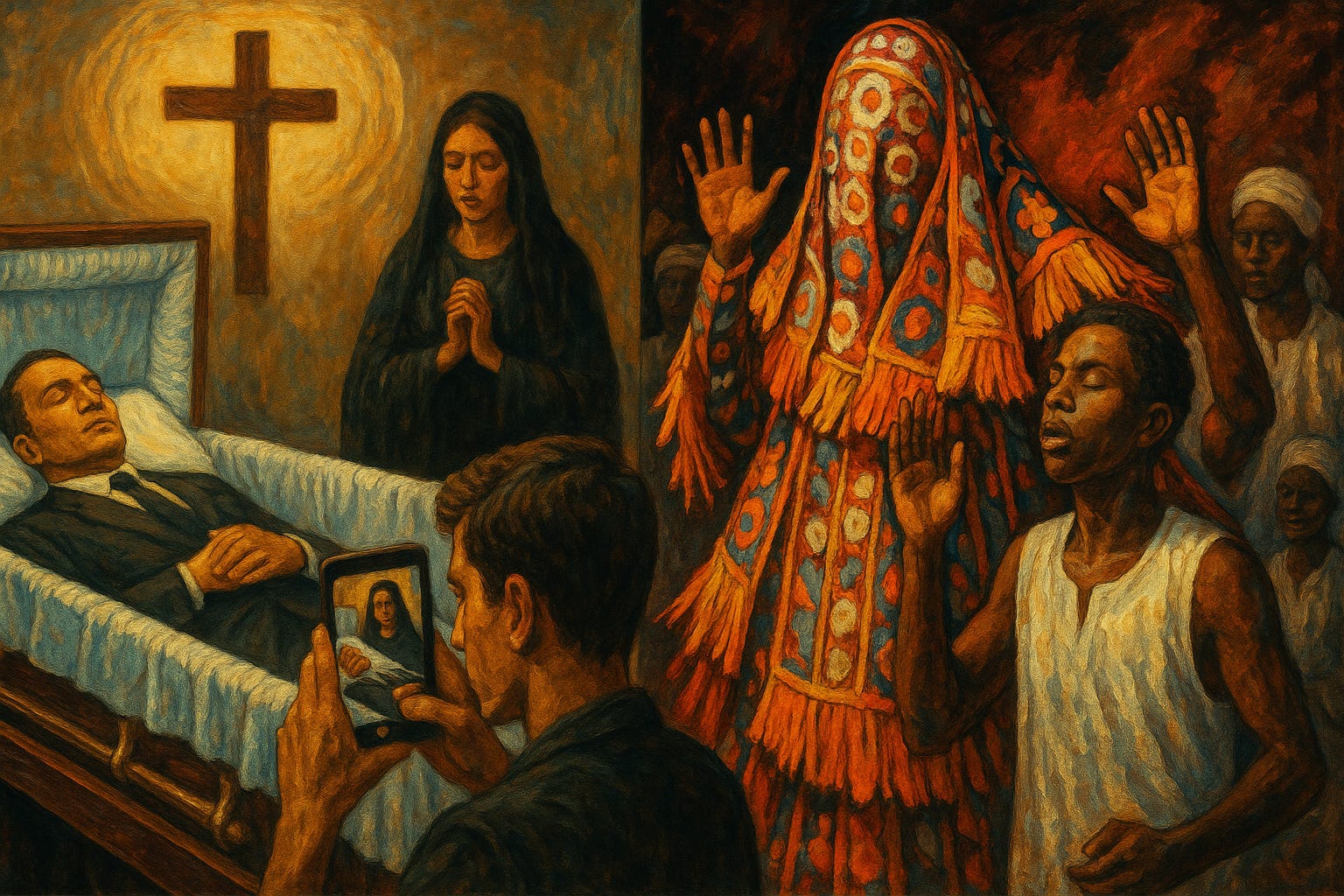
Since the very birth of photography, humans have turned their cameras toward the dead. Victorian death portraits, images of loved ones lying peacefully in their final rest, have existed for over a century. Today, these images are easier to share than ever before – posted online, circulated in private messages, stored on our phones. Yet the question remains: Who do these images serve?
Are we trying to preserve something eternal, or are we clinging to the illusion that there is no end? Are we honoring the dead or seeking attention for our grief? Are we holding on to the wrong thing and, in doing so, blinding ourselves to the beautiful newness that follows every ending?
These are not new questions. Ifá has long guided us on the delicate relationship between the living and the dead. In the sacred Odu Ìrosùn Ìwòrì, Orunmila teaches that when we cling too tightly to what has already crossed the threshold, we risk trapping ourselves in sorrow and missing the blessings of renewal. He says:
"Kí ló n ṣẹlẹ̀ ní ayé yìí? À ń sunkún ẹni tó ti lọ, a ò rí ẹni tó ń wá."
"Why do we cry endlessly for those who have gone, yet fail to welcome the one who is coming?" (Ìrosùn Ìwòrì)
In other words, there is a difference between remembering and imprisoning ourselves in the past.
Death is a Door, Not a Wall
In Yoruba tradition, death is never the final silence that Western culture so often fears. It is a crossing, a movement from the visible world (Ayé) into the invisible realm (Òrun). Ancestors are not gone; they have simply changed address. When we take photos of the dead, we may think we are freezing a moment in time, but we must ask: are we truly preserving their essence, or are we preserving our fear of letting go?
The camera, by its nature, captures only the outer shell. The spirit has already departed. A photograph can honor a life, yes, but it can never hold the person themselves. Ifá would remind us that the most powerful memory of the dead is not the image but the legacy of their deeds and the prayers we send for their safe passage.
In Ogbè Yekú, Orunmila teaches that offerings to Egúngún (the collective ancestral energy) must be made with the intention of helping the departed continue their journey. He warns that when the living cling obsessively to physical reminders, we may disturb that journey:
"Ẹ̀mí kò lè rìn bí a kò fi ọwọ́ rẹ̀ silẹ."
"A spirit cannot walk freely if we refuse to release its hand." (Ogbè Yekú)
A Society That Photographs Its Dead
So, are modern death photographs inherently wrong? No. Images can comfort the bereaved. They can document history. They can help families remember the physical beauty of a loved one. But there is a danger when these images become commodities – shared for likes, used to dramatize grief, or consumed by strangers who have no connection to the deceased.
Ifá would ask us to examine our intention:
Are we seeking true remembrance, or validation?
Are we honoring the person’s life, or our own public image?
Are we building bridges with the ancestors, or are we trying to stop time?
What If We Released the Fear?
If we accepted death as a natural return to Òrun, we might not need as many photographs. We would know that our loved ones are not lost; they are transformed. We would see their presence in the rustle of leaves, in the songs we remember, in the strength we carry forward from their teachings.
The proverb says:
"Ìkú ló mú òrìṣà wáyé."
"It is death that makes the orisha manifest in the world." (Òtúrá Òsé)
Without endings, there are no beginnings. The death of a loved one can inspire us to live more fully, to continue their work, to build a life that honors them. This is a far greater tribute than any photograph.
For Supporting Subscribers (Paid Section)
In this week’s private section, we will go deeper into Egúngún practices that help us release grief while strengthening our ancestral connection. We will share a simple ritual you can perform at home to bring peace to the departed and clarity to your heart. This ritual uses light, water, and prayer to open communication with Òrun and release attachments that weigh us down.
We will also explain how sacred scents can be used to bless your altar or photographs of ancestors, transforming these images from mere pictures into tools of spiritual connection.
Stay blessed, and may your Ori be guided by wisdom.
Àṣẹ o!
Babá Tilo de Àjàgùnnà
DAILY IFÁ
🔜 Coming on DAILY IFA ACADEMY: "When the Hunter Becomes the Hunted"
Ògbè Òsá reveals what to do when betrayal strikes. Discover the trap, the rescue, and the ritual to protect your Orí. Out Saturday, August 17th.