


Always talking? You might be losing connection.
Always listening? You might be losing your voice.
Greetings, Beloved Circle of Light,
In today's journey, we reflect on a timeless truth: “One‑sidedness always has a price.” This simple maxim—“If you only speak, you create dependency; if you only listen, you lose leadership; if you only perfect, you miss opportunities; if you only speed, you produce chaos”—was born from lived experience and holds deep spiritual resonance.
Let’s explore how each imbalance plays out in our lives and in the sacred stories of Ifá, uncovering how to walk the middle path with grace and power.
Deep Dive into the Four Imbalances
1. Speaking Only: The King Who Spoke Too Much (Odu Ogbe Meji)
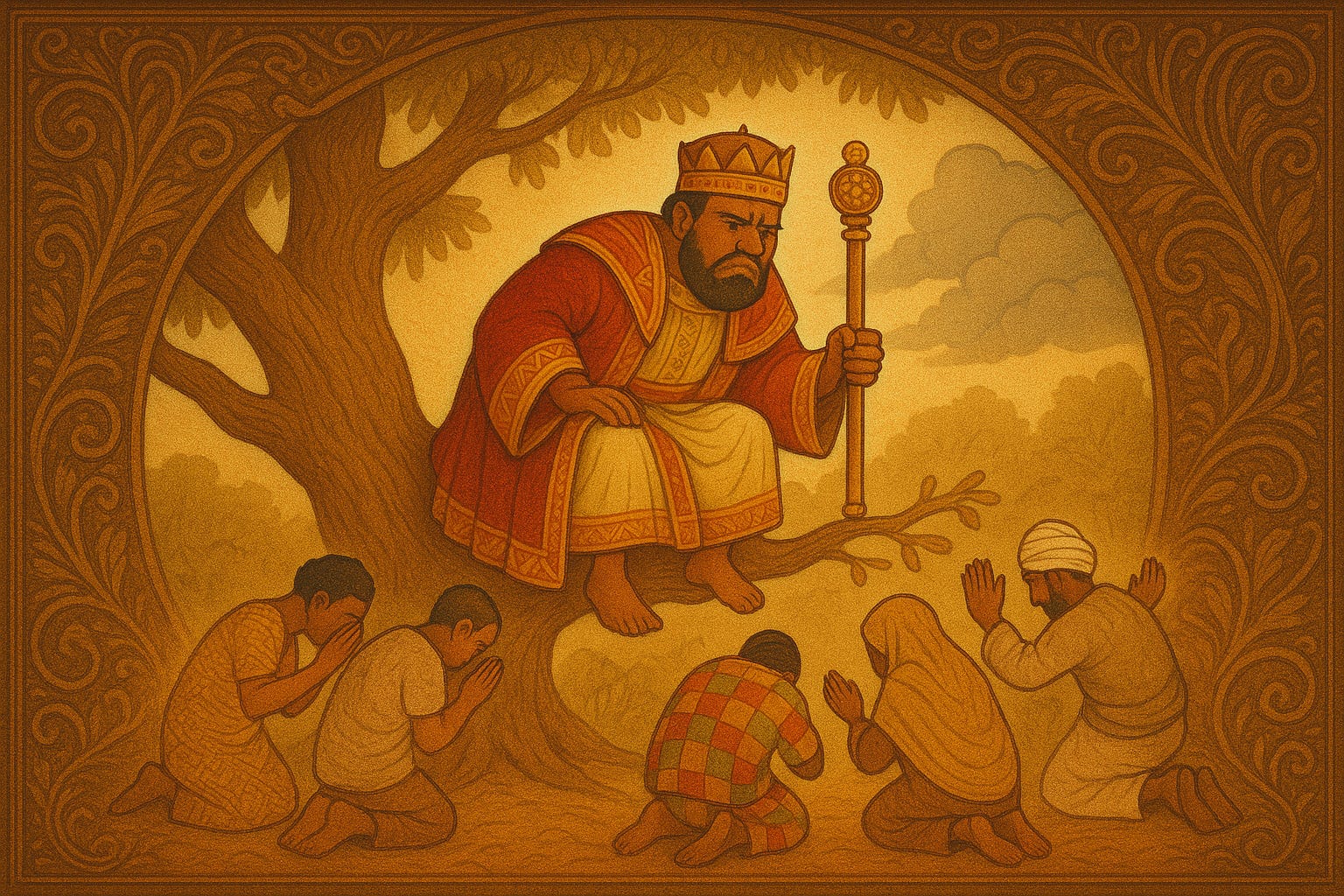
Long ago, in the kingdom of Ará-Igbo, a great king was known across the land for his oratory. His voice could settle disputes, inspire warriors, and silence a crowd. So loved was his wisdom that people came from far villages just to hear him speak.
But this king had one flaw—he never listened.
Even his closest advisors feared interrupting him. He’d call council meetings, speak for hours, and dismiss everyone without hearing a word. At first, the people were in awe. But over time, problems grew: disputes remained unsolved, trade imbalances worsened, and strange omens appeared.
One day, Orunmila disguised himself as a farmer and approached the palace. When the king demanded he speak, the farmer stood silently. The king grew irritated. “Why don’t you answer me?”
Orunmila replied: “When the ears are closed, the tongue is wasted breath.”
The king laughed it off. But that night, he dreamt of his ancestors walking away from him in silence. When he awoke, the palace was quiet—too quiet. His council had resigned. His people were no longer coming to court.
He had spoken himself into solitude.
Lesson: Speech without listening creates dependency—and eventually, alienation. The king lost the very power he thought his words gave him.
When you always speak—dispensing advice, instruction, answers—you become the oracle. People rely on you, true—but they also stop thinking for themselves.
Modern life connection: Are you the "talker" in meetings or family gatherings? If so, invite another to speak. Empower them. Your silence may do more than your words.
2. Listening Only: The Apprentice Who Disappeared (Odu Odi Meji)
In a forest shrine near Ìjẹ̀bú, a brilliant apprentice named Fálọlá trained under a respected Babaláwo. She was known for her silence. Always listening. Always writing. Never speaking.
Over the years, she accumulated vast knowledge—every Odu memorized, every ritual noted. But when her master passed, the elders came to test her. They asked: What do you believe? How do you guide the community?
She froze. She had no voice of her own.
In the dream realm, Orí—her inner head—appeared to her and asked: “Do you serve Ifá or do you echo others?”
Ashamed, she journeyed into solitude, seeking her own voice. She finally returned not with scrolls or chants—but with a single story from her heart.
Her story moved the elders more than all her years of silent study.
Lesson: Listening is sacred. But if we never speak, we become vessels of others, not leaders of truth. Wisdom must breathe through your own voice.
If you listen and absorb endlessly without contributing, people stop hearing you—or worse, you lose the power that comes from your own voice.
Practical reflection: Balance your listening with your own small truths. Speak your "yes" or "no" gently. Anchor your presence.
3. Striving for Perfection: The Potter of Oyeku (Odu Oyeku Meji)
In the town of Òṣogbo lived a potter named Òní. She was devoted to Ọbàtálá and obsessed with creating the perfect clay vessel—smooth, symmetrical, flawless.
She worked day and night on a single pot, refusing to sell anything less than perfection. Customers waited for weeks, months. Her hut filled with discarded pots she deemed unworthy.
Then came the Festival of Ọbàtálá. The custom was to bring your best work as an offering. Òní, still perfecting, arrived late. The procession had ended. The elders said, “Your work is beautiful—but the Orisha cannot drink from a pot that was never offered.”
Òní wept. She had created beauty, but missed the moment.
Lesson: Perfection, when it paralyzes, becomes pride. The Orisha bless those who participate, not just those who polish. The perfectionist waits too long. They polish, tweak, refine—until the opportunity slips past.
Modern lesson: Release the tyranny of perfect. Launch that project, send that letter, say that prayer.
4. Racing Ahead: The Tornado of Ogunda (Odu Ogunda Meji)
Once, a young hunter named Ayò set out to find the legendary Ẹjìre deer, whose appearance was said to bring fortune. Elders warned him: “Make ebo first, and ask Ifá when to depart.”
But Ayò was impatient. “Time is money,” he said, “and the deer won’t wait.” He rushed off without divination, ignoring the signs: a broken arrowhead, a bird flying backward.
He chased shadows through unfamiliar woods, until the sky turned dark. A tornado descended, scattering his arrows, blinding his vision. He was lost. Injured. Hungry.
After days, a babaláwo found him and asked, “Did you run toward destiny—or away from guidance?”
Ayò bowed in shame. “I ran toward what I wanted, not what I needed.”
Lesson: Speed without alignment leads to chaos. Ifá doesn’t rush; it unfolds. And so must we. In speed alone, there’s unrest. Quick decisions jar context. Fast fixes fracture deeper understanding.
Your life: Do you act fast to impress, solve, control? Pause, reflect, ground—in breath as in prayer—and remember: haste gives meager results.
Wisdom in Harmony
The essence of these lessons echoes Odu Eji Ogbe, the prime balance of Ifá, where crossing extremes is guided by centeredness.
“A person who pauses is never lost.” – Odu Ogbe Meji
Balance is not static—it’s dynamic. It’s the dance between listening and speaking, doing and waiting, refining and releasing, speeding and pausing.
By measuring your speech, choosing where to excel and where to pause, you create space for both clarity and humility. This is true leadership, true wisdom—where dependence meets empowerment, action meets insight, perfection meets opportunity, speed meets order.
For Supporting Member
In this week’s section, I’ll share a ritual to rebalance your personal and spiritual equilibrium, including how to identify which “side” of this imbalance carries your energy, and a guided exercise to recalibrate communication, timing, and focus using EWE ORISA as your spiritual ally.
Wishing you harmony in every word you speak, every moment you honor.
Babá Tilo de Àjàgùnnà
DAILY IFÁ